Showing posts with label moo. Show all posts

April 23, 2014

Pasture raised beef available this fall

This fall, we will have a limited number of steers available for butchering. They will be sold by the whole, half or quarter.  For those who have never purchased beef in bulk, don't worry! We'll explain it all and help you along the way.

Bulk beef is measured in three weights - live weight (how much the animal weighs while alive, also called "on the hoof"), hanging weight (the weight once killed and eviscerated), and processed weight (the actually amount of beef products you take home for your freezer).

Once a steer (castrated, male cattle) reaches a good live weight (usually around 800-1200 lbs for the type of cattle we raise), we will schedule a butchering date with the butcher.  The animal will be delivered to them, killed, cleaned and hung to age.  At this point, the butcher will call us with the hanging weight.  After aging for approximately two weeks, the steer is then cut into all the pieces you're familiar with - roasts, steaks, ground beef, etc. - then packaged and flash frozen.

About our beef
Our cattle are raised on pasture -- they eat grass.  They are never fed grains. That means no genetically modified grains (non-GMO), no soy products, no chemicals in their feed.  We do not treat our pastures with chemicals.  The pastures are fertilized by our cattle, chickens, pigs, and rabbits.  That's it.  We do not use growth hormones, steroids, or antibiotics.  As needed, we will give our cattle Chaffhaye which is a non-GMO, alfalfa hay product that is chopped and mixed with molasses and yeast to start fermentation.  Chaffhaye is like providing pre-digested fiber and nutrients to the cattle. They love it and do very well on it.  We love that it's all natural and is mimicking their own digestive process.

We believe in making sure our customers know exactly what they are purchasing. One woman shared with us that after being told her beef was grass fed and grass finished, after visiting the farm to see where they animals were raised, she then called the butcher and mentioned that the cattle were grass finished.  She was stunned when the butcher told her that every steer processed from that farm had corn in its stomach. She was lied to.  You are welcome to call our butcher once the cattle are processed and check up to be sure they are not fed grain. You have our guarantee that all the butcher will find is grass and possibly Chaffhaye.

Setting a date
Greg will determine when the steer has reached the appropriate weight and will schedule a processing date with the butcher. Once we have a date, we'll let you know.  We estimate that the steers will be ready this fall anytime from September to late November. 

Deposit
We have a limited number of cattle available and will require a deposit of $250 to hold your spot.  Deposits are non-refundable.  Cash or check only.  You can mail us a check or bring it by the farm.  We will not hold a place for you until we receive the deposit.

Butcher fees
You are responsible for the butchering fees which are payable directly to the butcher. The butcher charges between $60 and $80 for a one time kill fee. Those purchasing a whole steer will pay the entire kill fee. Those purchasing a half will pay half the kill fee. Processing is $0.65 per pound hanging weight.

Calculating cost of the steer
Once the steer has been killed and eviscerated, the butcher will give us a hanging weight.  A lower live weight will yield a lower hanging weight so these are all estimates.  We are estimating a whole steer will yield 600-800 lbs hanging weight depending on the live weight. 

Whole steer $3.25/lb
Half or quarter steer $3.50/lb

A whole steer would cost $1,900 to $2,600 plus butchering fees depending on the hanging weight.  These are ESTIMATES.  We will give you the actual hanging weight once the steer has been killed.

These prices are subject to change as we get closer to butchering time. Once you pay your deposit, you are locked in at this price.

Cut list
Once we receive your deposit, we will send you the butcher's standard cut list. You are responsible for approving this cut list. If you want to change the cuts, you are responsible for any changes in the fees. Cut lists can seem intimidating but we are happy to help you choose the cuts of beef that will work best for your family.  An example of a change would be having hamburger patties patted out for you instead of receiving 1 or 2 lb packages of ground beef.  Minute steaks and fajita meat are additional examples that might cost a small bit more than the standard list.

Payment
There are three payments: deposit, cost of the steer, processing fees.  The deposit and cost of the steer are payable to Greg Mauzy.  The processing/butcher fees are payable to the butcher.  We only accept cash or check.

We will take installment payments up to the butchering date. If you want to make a monthly payment throughout the spring, summer and fall, we can apply it to the total cost of the steer at butchering. We will send you a monthly statement of your payments.

Bottom line
The two most asked questions are: How much total will it cost? and How much meat will I be taking home?

Total Cost is based on the hanging weight.  We do our best to give you examples of how much the cattle will weigh but until it has been taken to the butcher and weighed, we cannot promise a small or large steer.

The total amount of meat is usually 40-60% of the live weight.  Based on this estimate, a 1,000 lb steer could yield 400-600 lbs.  Factors that influence this range is bone density, how the meat is cut, amount of fat that is trimmed off, etc.

How to reserve a steer
Email us at skyviewfarming@yahoo.com and let us know if you want a whole, half or quarter.  We will respond and let you know what to do from there.

This is first come, first served.  Emailing us does not reserve your beef; your deposit does.

May 1, 2013

Visualization of rotational grazing


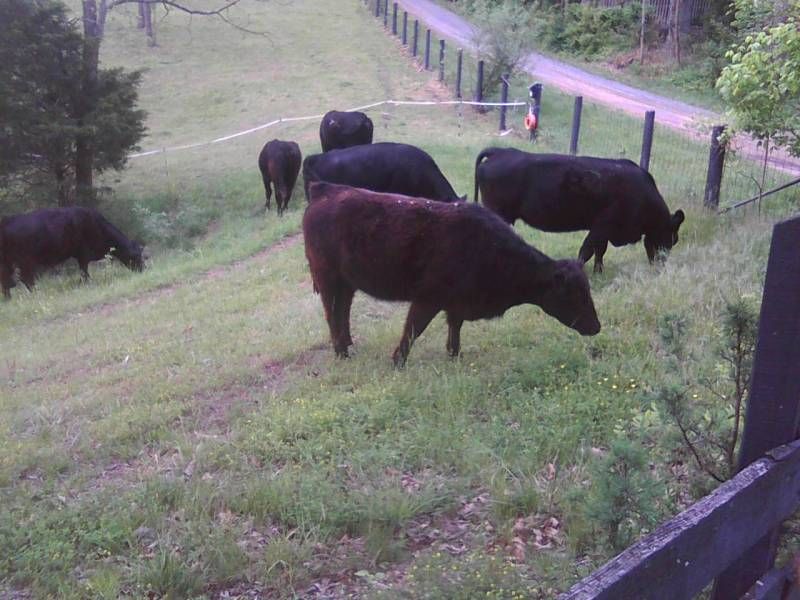
This photo shows you where we grazed the cattle.  We use electric fencing to create temporary pastures, let the cattle graze for a few days, then move them to the next area.  The area where they first grazed is already starting to come back!

This type of intensive grazing ensures that the cattle eat down all the grasses, including all the types they don't particularly like.  It also gives the pasture denser manure coverage which gives us stronger fertilization and helps the pastures grow back faster.

We love standing in this spot and looking at the differences in the three pasture areas.

April 24, 2013

Rotational grazing

It's Spring. Grass is back. The pastures are looking beautiful. It's time to start rotational grazing again!

The first group to get some new grass is our five Ossabaw/Tamworth piglets.  We've had them in the barn, training them on electric fencing so we can safely put them out in the woods to graze on acorns and root around in the dirt.  The last time we tried this, the piglets were still too small and they easily escaped under the electric wire. Now that they are a bit larger, they were contained in the paddock area. They loved all the space, the green grass and all the dirt to dig their snouts into.  They immediately found a way to make a mud puddle.

The next group to move was the two steers.  They are used to rotational grazing and know that when we lower the electric tape, it's time to move to a lovely, munchy new location. They come running!  To put weight on them, they will be on intensive grazing. This means we give them a relatively small area to eat down, then a day or two later, move them to a new, small patch of pasture for another day or two.  We'll continue to move them until they get to weight and are ready to be butchered.

Then we gave the pregnant cows a very large piece of pasture.  Seven pregnant cows and three cows with calves were moved to where the grass really was greener on the other side of the fence.


They bottle-necked as soon as they walked through the gate. New grass is very appetizing!  With some mild encouragement, they moved through and let the other cows and calves come through.


Happy cattle on green grass.  It's great to have all our livestock on pasture!

March 25, 2013

Training cattle

A few weeks ago, ten pregnant cows were brought to the farm. Since they arrived, one has delivered a beautiful bull calf and we're waiting for the rest to calve.

One of our first priorities was to train the cattle and to gain their trust.  Yes, you can train cattle. They must come when we call them.  We must have that control over them;  not just for rotational grazing but also for their own safety.  It is an imperative that they answer when we call them.

We also need them to trust us and not run away from us.  With cows ready to give birth, if something goes wrong, we need to know that our presence will not add more stress to the cow in an already stressful situation. The last thing we need is a cow fighting us when we're trying to help her push out a calf.

Just like with most animals, food is the great motivator.  We raise and finish our cattle on pasture, but in order to train these cows and to get them used to our presence, we call them up to the barn once or twice a day with the lure of sweet feed laced with mineral supplements from time to time.

So. How do you call cattle? Any call will work as long as you're consistent, but we shout out, "WHIRRRRLLLLLL"


June 19, 2012

Happy pasture

This is the secondary benefit of mob grazing - concentrated amounts of manure in a small area.

That's a lot of poop

This section of the pasture has been eaten down and well fertilized.  The cattle were so excited about moving to a new pasture that they pushed down a section of fencing trying to move to a fresh field.  We got the posts in the ground, ran the electric tape and opened a section for them to move through.  They barely made it 10 feet before they start chomping away.

May 2, 2012

Mob grazing

We haven't posted much about cattle because there's not much to say. They are slow growing and have a long gestational period. They eat grass and hay. They moo. They walk around. Not very exciting. Not a lot to report on them unless something major happens such as new bottle-fed calves arriving or a sick animal.

Right now, there are Jersey steers and dry Angus cows in the field.  The steers arrived here as bottle-fed calves in the winter of 2010/2011.  They are not growing quickly and Greg really wants to get some weight on them so they can be butchered this fall.

To that end, Greg has decided to take a new approach to managing the cattle during the spring and summer this year.  Typically, the cattle will graze on a very large pasture area for a long period of time, often for the entire season.  The cattle wear down that pasture and eat it down to the dirt.  It requires them to range over a large area, expending food energy that could be used to increase muscle mass and bring them to market weight much faster.

In comes the idea of "mob grazing".  This is also referred to as intensive pasture management.  I'm sure there are a few other catch phrase names for it, but we call it mob grazing.

The premise is simple. Reduce the amount of pasture the herd has access to, then move them to a fresh area as soon as they've eaten down one section.  Depending on the number of cattle in your herd and the size of the pasture area they are grazing, you might move them daily, every few days or weekly.  Your goals are: reduce the amount of walking, let the cattle eat down that area and let it rest and regrow before bringing them back to it, intense manure spread in a short period of time.

By utilizing this method of grazing, you are going to have more intense manure coverage in your pastures.  The cattle won't be walking over acres and acres and acres to find fresh growth of grass.  This will help them put on weight much faster.

Greg started this probably about a week ago. We've seen the cattle resting more - a sign that they are full and chewing their cud - instead of constantly wandering looking for new grass.  He hasn't had to put out any more hay.  They are getting fresh, tender, Spring grass.

Today, the cattle moved to a new section of pasture.  Only had to call them two or three times because once they realized it was time to move to new grass, they came running!

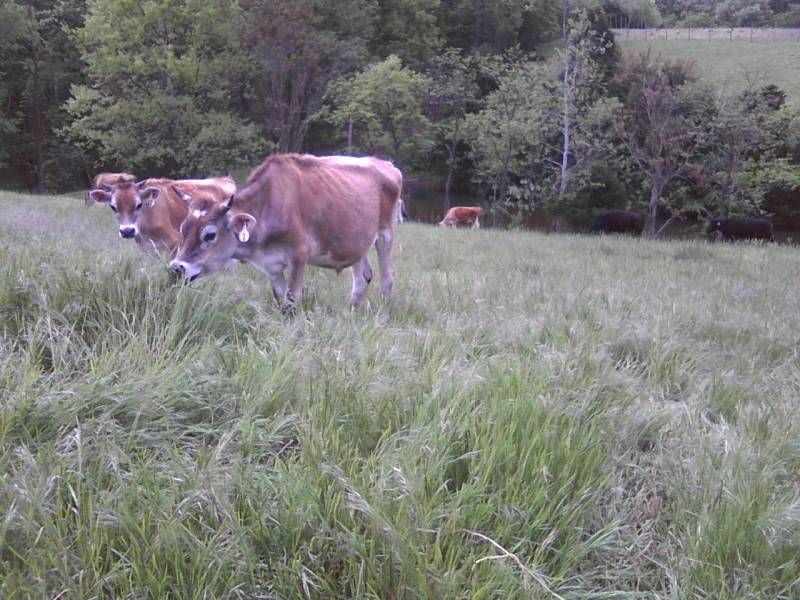
"Heads down" is a good sign during mob grazing. Everyone's eating and happy.

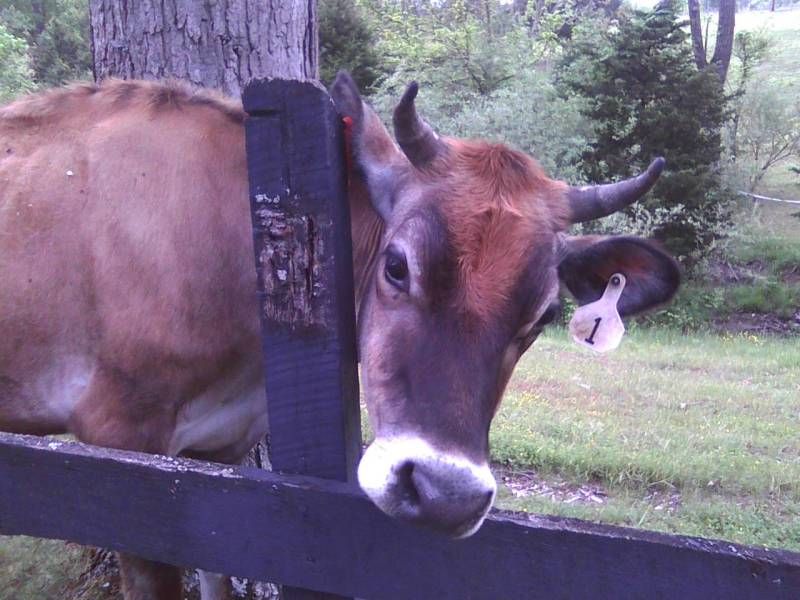
These are very slow growing dairy steers.  They are boney! We're hoping the mob grazing will put some significant weight on them.

April 6, 2011

Fixing fences

The older calves really need a pasture. They've been penned in the fenced area behind the barn. It's a great area for keeping an eye on the younger calves and makes it easy to keep an eye on their health.  But they've eaten down the grass until there's just about nothing left.  Then need more pasture and the grass needs a chance to grow back.  I've had to hold off putting them in the pasture behind the barn because the fences needed to be fixed. Barbed wire needs to be tightened or added, field fencing needs to be replaced, new fence posts need to be driven and a new gate needs to be put up.

I was able to get some partial rolls of good field fencing at a farm auction and my cousin Mike got us a great deal on fence posts.  Every day after work, we've been working on putting the posts in the ground, tightening barbed wire and putting up the field fencing. If the weather holds out, we should have it done this week. 

This pasture will give the calves about three acres to roam, eat lush, green grass and get into trouble.  I'll be putting Sharon's crazy nesting house and roosting house out there too. It'll be a busy pasture!


March 28, 2011

Make some money. Spend some money.

All but one of the calves have been sold. The new owners seem very pleased with their calves and I wish them all the best.

Spent a very cold, very windy morning at the farm equipment auction this past Saturday. Lots of large equipment for sale but not much that I needed. Prices were going high and I didn't bid on anything.

Bought plastic deer barriers to protect the gardens. My cousin got a great deal on fence posts for them. We need to better protect the gardens this year. Last summer, the deer had a salad bar buffet every night in my corn field. Not a single ear of corn made it to my dinner plate.

Picked up some paint for the new chicken houses. Ended up getting three 5-gallon buckets on clearance for the price of one regularly-priced 5-gallon bucket. I do love a good deal!

We got one of the cattle stalls mucked out and put out fresh straw.   Need more straw so we can clean out the other cattle stall.

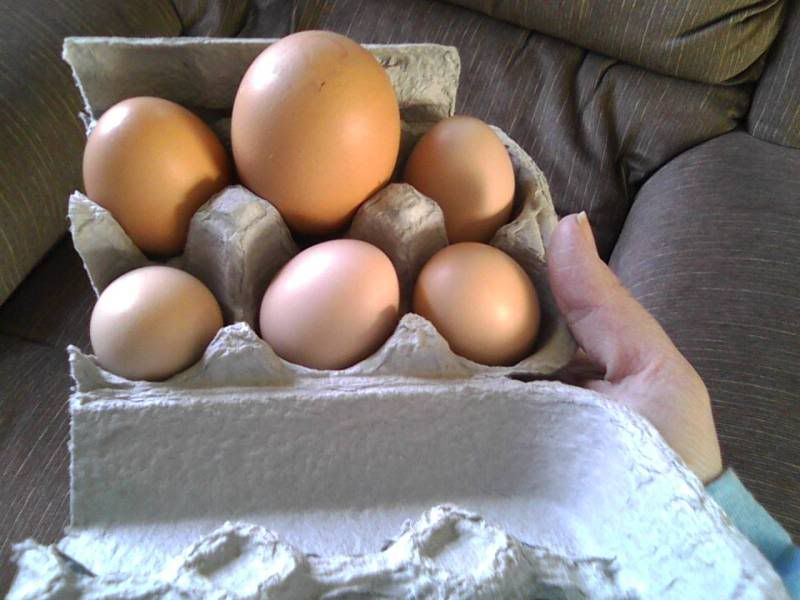
Back row: Regular size egg, Double-yolk egg, Ameracauna egg
Sharon's Ameracauna chickens have started laying finally. The eggs are smaller than a normal size egg, but they'll get bigger the more often the chickens lay. We're getting an egg almost every day from them right now.  They started nesting on their own in the pine shaving litter on the floor of the coop so we're keeping them locked up for a few days to force them to the nesting boxes.  So far, no blue egg though.

We also got another one of the double-yolk eggs.  When you compare its size to the itty-bitty Ameracauna eggs, it's hilarious to look at. We chuckled about it all weekend long.  Sharon took the half-dozen eggs in the picture to her mother. She said she had the double-yolk egg for breakfast this morning and is eager for more. Hooray for a "delicious" review!

My chickens put out eight eggs on Saturday. I have enough now that I can send my daughter over to the neighbor's house with a dozen eggs to sell.

March 22, 2011

More calves


Six more calves came in last night.  These are all for sale. I'm hoping to have them sold in a couple days.  Again, more of the Jersey bull calves. These boys range from 3 to 7 weeks old. They're all still on the bottle, of course, but are figuring out grass, grain and hay as well.  The Dairy Bar feeder is working well with these new calves too.

March 2, 2011

Busy weekend

The weekend started with the loss of calf number 12.  He seemed a bit off from the beginning but seemed to rally until Friday night. When my cousin and I went out to feed, #12 wouldn't get up and seemed very cold.  We brought him into the garage to try to warm him up.  I kept a space heater on him as well as a heat lamp.

Once we got the calf in the garage and started warming it, I had to take my daughter to her 4H play rehearsal. Sharon and her kids were here and came along to join in on the chaos fun.  The skit was about a man-eating chicken.  Or was it about a man, eating chicken? We may never know.  The kids had a great time though and that's what matters.

Number 12 died during the night.  The kids pretty much expected it and weren't heartbroken.  It was frustrating to lose another calf, especially since we had no clear idea what was wrong with this one.

The rest of the weekend involved daily feedings, planting seeds, building a fence to help keep the youngest calves and older calves separated, taking stuff to the dump, 4-wheeling, letting the Ameracauna chickens out to free-range and making some nesting eggs to help encourage the hens to start laying.  It looks like a short list but don't be fooled.  There's always work to do on the farm and this past weekend was no exception.

February 23, 2011

More calves

Welcome calves number twelve through seventeen!

This past weekend, we took delivery of thirteen calves - twelve bulls and one heifer.  They were all about 3 or 4 weeks old, but I suspect one was only a week or two old because his umbilical cord hasn't dropped off yet.  We sold six of the bulls and the heifer to my cousins the same day they came to us. That leaves us with six new calves on the farm!

With six new calves, all needing to be bottle fed, I needed a better feeding solution than a bottle for each calf. One sure way to be personally violated by calves is to walk into the herd with only one or two bottles.  They immediately start salivating and look for something to suck... my elbow, my knee, my boot, my wrist, each others ears... I think you get the idea.  Feeding them one or two at a time was also going to be a very slow task every morning.  Sharon found a Dairy Bar multi-nurser online and suggested that I could make something like that. After investigating, it was a lot easier and probably just as inexpensive to simply order the Dairy Bar.  I found a pretty good price on it at Valley Vet.  It arrived Friday, giving me a bit of time to check it out and read over the instructions before the calves arrived Saturday morning.

The nipples are designed to be slow-flow. This encourages proper salivation and makes sure the milk doesn't bypass a stomach - two things that can lead to scours.  Since this only feeds five calves and we have six, I've been bottle feeding a different calf at each feeding so they all get a chance to nurse better at the Dairy Bar.  I'm hoping this helps reduce the occurrence of scours in these young calves.


The dairy farmer we're buying the calves from is dropping calves pretty much daily. We're hoping to get more every weekend and turn around and re-sell them within a day or two.

December 10, 2010

#11

No matter if your farm has 1,000 head of cattle or less than a dozen, every loss is felt.

Yesterday morning, we lost calf #11.

This calf has always seemed a bit "off."  He's was smaller than the others and a bit runty.  He wasn't an aggressive eater so we had to be sure he got his share of milk replacement. He had scours but I got him through that.  He finally seemed to be gaining weight in his front half but his back half still seemed pretty scrawny.

I fed him the night before and he seemed okay but when I went in for the morning feeding, he was laying on the ground, flopping around like a fish.  I'd get him standing up and he'd fall back down, roll onto his back and flop around some more.  He was dead within hours.

My daughter was particularly attached to this one and called him Baby because he was the smallest.

Life and death are part of living on a farm. The births are celebrated and the deaths are felt equally as deeply.

November 28, 2010

Tagging and banding

Milk-feeding update: five of the six calves drank from a trough this morning!  Only the smallest calf, Baby (#11 with the ear tags), is still on the bottle.  He still has scours so he's also getting electrolytes in his bottle. Tonight, I'll be trying some of the scours/pneumonia medicated milk replacement for him and adding some of it into the regular milk replacement for the rest of the calves.

With eleven calves on the farm, it's becoming more and more difficult to keep track of which calf is which. When you are trying to keep them all healthy, it's especially important to be able to recognize which calf needs medication and which already received it.

So I bought an ear tag set.

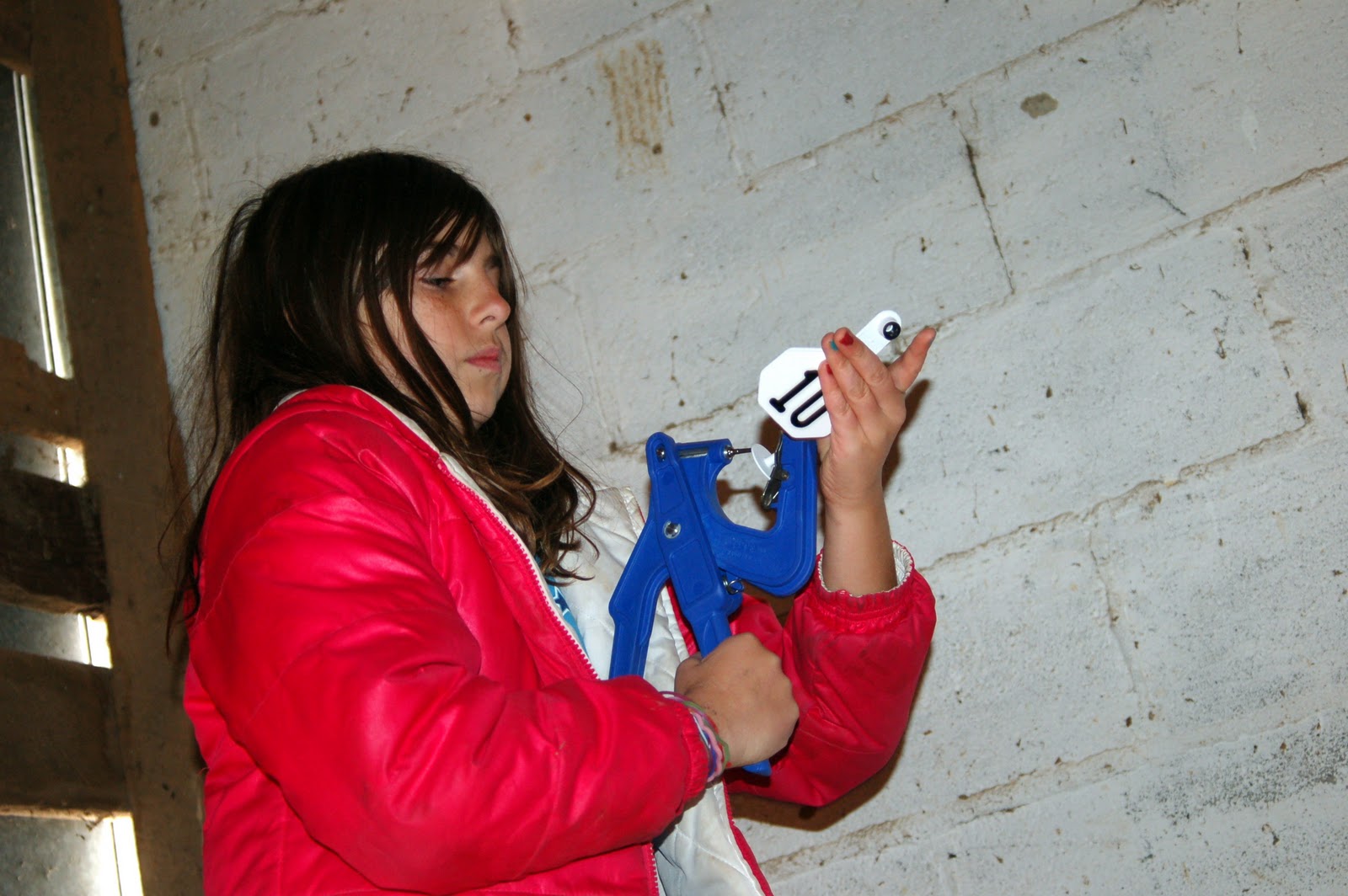
My daughter, Sammy helped prepare the tag gun and sprayed the ears with iodine after I put the tags in.  I showed her how to tag the ears, then helped her tag one calf.  Most of the calves are still small enough that there wasn't much of a struggle to hold them for the piercing.

When tagging an ear, look at the inside of the ear for three lines of cartilage. I pierce between the 2nd and 3rd lines. After checking to be sure the backing is securely attached to the pin, Sammy gave the ear a squirt of iodine to help protect the wound.

After tagging all the calves, I decided to band the largest bull.  He was already on the ground for the ear tag so we grabbed the bander and now he's walking a little funny.

My daughter understands that in a few days, he'll no longer be a bull but will be a steer although she isn't exactly sure about all the specifics.  Even so, I'm proud to be raising a her on a farm and teaching her about animal care and hard work.

November 25, 2010

Not quite a dozen

My secretary took a vacation from blogging for a while but things have been plugging away on the farm.  The summer heat and lack of rain took a big toll on the garden and it basically flopped. Next summer will require some type of drip or watering system that isn't labor intensive.  I was able to do some canning from the garden, but it was no where near what I was hoping for.

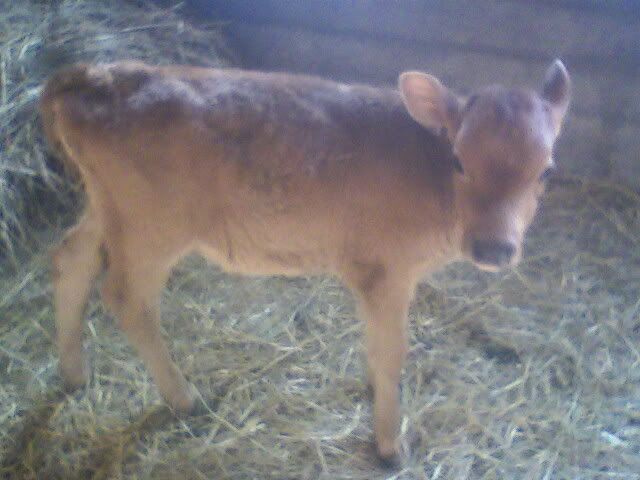
The biggest news on the farm is the appearance of calves!  My cousin and I have been buying Jersey bull calves from a local farmer and seeing how they do.  The goal is to get them to 800 lbs and sell them at auction.  No idea how much they'll go for, but anything over $1/lb would be good.

Working with a sick calf
It's been tough with the calves though. We have eleven right now but there were more who didn't survive - scours, pneumonia and just poor health got the better of about half a dozen.  I have been expecting about 50% mortality so we're ahead of the curve for now.

All of the calves come to us needing to be bottle fed which can be interesting when I'm trying to feed them by myself. Right now, half of them are being weaned off milk replacement.  The other six are being weaned off the bottles and being fed milk replacement in buckets or troughs.  Last night was the first night of transitioning them from the bottles and it went really well.  All except for one were pretty eagerly drinking from buckets this morning.  That cuts feeding time down significantly.

One of the largest calves was coughing and had nasal discharge - the first signs of pneumonia. I gave him a shot of antibiotics and he seems to be rallying.  The key seems to be hitting them with a dose of antibiotics as soon as the symptoms appear.  The antibiotics I have on hand aren't strong enough to fight it off if I don't catch it right away.

I think a few of the newest calves have scours so I'll be marking them at tonight's feeding and giving them liquid electrolytes to combat dehydration.

Chewin' their cud like good little calves should
My goal is to have a dozen calves; just one shy of that goal.  If I can keep a rotating door going on the farm with new calves coming in as older ones are weaned off the milk replacement, I'll keep adding to the herd.