Showing posts with label out to pasture. Show all posts

June 20, 2013

Piggie Playpen

Our pigs are pasture raised along with all our other livestock.  For the pigs, we started out with Ossabaw/Tamworth weanlings that were born for mischief.  We had quite a few escapes that resulted in us chasing them all over the farm. Humorous now, but very frustrating at the time.  We used the barn as a shelter for them but the barn door was always open to an electric fenced paddock. They did very well in there, but we wanted them to have a larger area back in the woods with access to lots of roots, trees, acorns and shade.

Greg used four rolls of electric netting to create a huge square area. Using a fifth roll, he divided the area in half giving one side to the three males and the other side to the two females. 
Male area to the left. Female area to the right where the feeder is tied to the tree

Corral panels around the feeder. This will allow us to easily (hopefully) corral the pigs when it's time to load them for butchering.

Greg made a vertical waterer that holds 10 gallons

Happy pigs, rooting around

The fencing may not be straight, but it works!

They are loving rooting around in all the leaves

May 1, 2013

Visualization of rotational grazing


This photo shows you where we grazed the cattle.  We use electric fencing to create temporary pastures, let the cattle graze for a few days, then move them to the next area.  The area where they first grazed is already starting to come back!

This type of intensive grazing ensures that the cattle eat down all the grasses, including all the types they don't particularly like.  It also gives the pasture denser manure coverage which gives us stronger fertilization and helps the pastures grow back faster.

We love standing in this spot and looking at the differences in the three pasture areas.

April 24, 2013

Rotational grazing

It's Spring. Grass is back. The pastures are looking beautiful. It's time to start rotational grazing again!

The first group to get some new grass is our five Ossabaw/Tamworth piglets.  We've had them in the barn, training them on electric fencing so we can safely put them out in the woods to graze on acorns and root around in the dirt.  The last time we tried this, the piglets were still too small and they easily escaped under the electric wire. Now that they are a bit larger, they were contained in the paddock area. They loved all the space, the green grass and all the dirt to dig their snouts into.  They immediately found a way to make a mud puddle.

The next group to move was the two steers.  They are used to rotational grazing and know that when we lower the electric tape, it's time to move to a lovely, munchy new location. They come running!  To put weight on them, they will be on intensive grazing. This means we give them a relatively small area to eat down, then a day or two later, move them to a new, small patch of pasture for another day or two.  We'll continue to move them until they get to weight and are ready to be butchered.

Then we gave the pregnant cows a very large piece of pasture.  Seven pregnant cows and three cows with calves were moved to where the grass really was greener on the other side of the fence.


They bottle-necked as soon as they walked through the gate. New grass is very appetizing!  With some mild encouragement, they moved through and let the other cows and calves come through.


Happy cattle on green grass.  It's great to have all our livestock on pasture!

March 25, 2013

Training cattle

A few weeks ago, ten pregnant cows were brought to the farm. Since they arrived, one has delivered a beautiful bull calf and we're waiting for the rest to calve.

One of our first priorities was to train the cattle and to gain their trust.  Yes, you can train cattle. They must come when we call them.  We must have that control over them;  not just for rotational grazing but also for their own safety.  It is an imperative that they answer when we call them.

We also need them to trust us and not run away from us.  With cows ready to give birth, if something goes wrong, we need to know that our presence will not add more stress to the cow in an already stressful situation. The last thing we need is a cow fighting us when we're trying to help her push out a calf.

Just like with most animals, food is the great motivator.  We raise and finish our cattle on pasture, but in order to train these cows and to get them used to our presence, we call them up to the barn once or twice a day with the lure of sweet feed laced with mineral supplements from time to time.

So. How do you call cattle? Any call will work as long as you're consistent, but we shout out, "WHIRRRRLLLLLL"


March 12, 2013

Rabbit tractors

Skyview Acres' rabbits are raised on the ground, on fresh pasture daily.  We studied a lot of chicken tractors, checked out Polyface's and Nature's Harmony's rabbit tractors, and started brainstorming for a design we liked.

Considerations:
  • Hutch for kindling and protection from weather and predators
  • Enough grass area for a doe plus her litter
  • Keeping pellet feed dry during the rain
  • Easily movable
  • Seasonally friendly - not too hot in the summer, protection from snow and cold in the winter
  • Durability
 We searched and searched all over the internet to find others keeping rabbits on pasture but we didn't find very many examples.  So we got creative and started building.

The first version rabbit tractor was huge - 6'x4'. The hutch had a solid floor. We only put wired along the perimeter of the base to keep the rabbits from digging out.  It was very, very heavy.

First rabbit pen
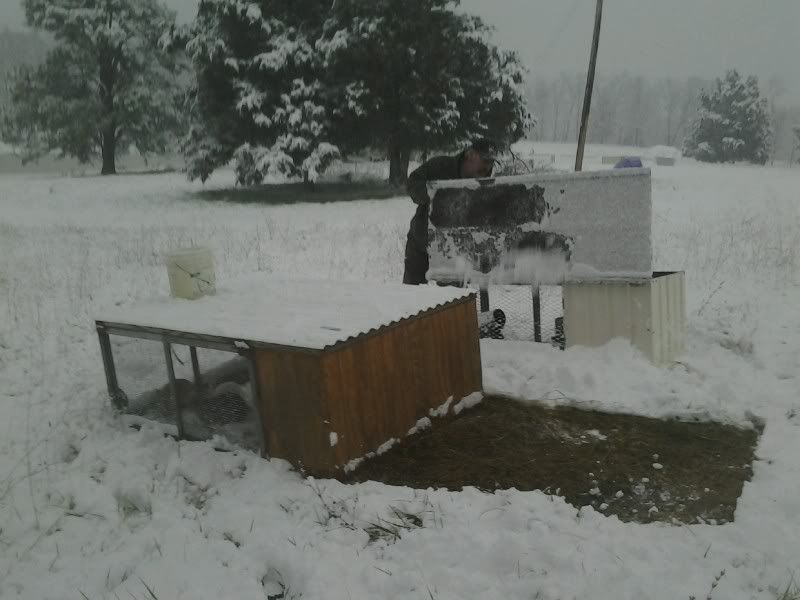
For the second rabbit pen, we used the same basic design but left half of the hutch floor as wire.  It was the same size and was built to house one doe plus her litter.  Even with some design modifications, it was still pretty heavy.

The third had a full wire floor for the hutch and the wood was ripped down to more manageable sizes so the overall pen was lighter.

At this point, we realized we were going to need a lot of pretty large pens if we continued with this design.  Eventually, we made it to our final design: a single pen split down the middle so it housed two rabbits with their own hutches and grass area.  The hutch doors were on placed close to the outside of the framing so the feeders could be attached to the hutch close to the center divider. This helps keep the feed protected from rain even during very windy storms.  Having the hutch doors to one side also gives the nesting boxes a little more protection from cold winds; boxes are placed against the center divider, not in front of a door.  The final big change was putting 1" sq wire along the entire bottom of the pens.  This keeps the rabbits from digging out and keeps predators from digging in.


We're pretty pleased with the final version of the rabbit pens. They're lightweight and can be easily moved each morning to new grass.  The rabbits have room to run and are able to hide out in the hutches if they choose.  There are only two challenges we're working on - the lids are too lightweight for strong winds if we use vinyl roofing and trying to move the pens in deep snow is pretty much impossible.  Right now, we put old tires on the roofs when the wind is 15mph or higher.  We're still working on the snow issue.  Fortunately we didn't have a lot of snow this winter so we have a few seasons to think about some solutions.

We're in the process of writing up construction plans for the pens. We'll let you know when they're ready!

March 5, 2013

Rabbit tracks

Green grass in a field of dead grass.  This photo clearly shows the path that a couple of our rabbit tractors took down through the pasture this fall.  It's the only green grass to be seen!


December 24, 2012

Pastured rabbits on snow

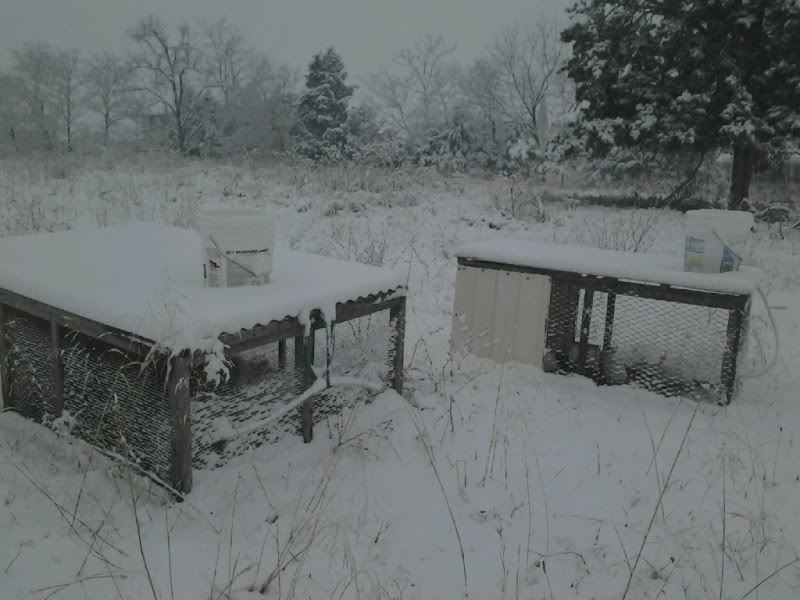
Last year, we began raising pasture-fed rabbits in January with a breeding trio. Greg built the pasture pens for them with a goal was to keep the rabbits on pasture year round. The does kindle in the pasture pens; the litter remains with the doe until weaned, then moved to a grow-out pen; the rabbits remain outside, year round, no matter what the weather.

We had a relatively mild winter last year with very little snow. It was pretty cold, but no precipitation really. This past year, we survived a derecho, a hurricane, extreme summer heat and some below freezing temps.  We have learned a LOT about dealing with the weather and how to work with it while keeping the rabbits on grass. But the weather we've been dreading is snow.

Freezing water bottles in the winter are a pain to deal with but we can manage. Trying to move 6' x 4' pens over inches and inches of snow... ugh. We really were not looking forward to dealing with that.  We couldn't leave them in one place and allow waste to accumulate. If not moved, they'd run out of grass in a day, two at the most.  Fresh grass daily is critical to the health and well being of these rabbits. Well, it snowed today. So far we have three inches and it's still coming down in buckets.

We moved the large grow-out pens to new snow-covered grass because they have an actual hutch where the rabbits can get up off the snow. Their body heat keeps them very warm in the hutch area so we're not worried about them resting on the cold snow or eating the snow and lowering their body temps. The smallest kits which are about 5 or 6 weeks old were left on the snow-free ground. We gave them a couple snowballs to chew on for water but not a lot since we don't want to drop their core temperature too much.

One doe has a 10 day old litter. I put extra hay over them for additional warmth but they should be fine. We have three does due to kindle. Double checked that they had plenty of hay.

Now, we wait and see what happens.

June 19, 2012

Happy pasture

This is the secondary benefit of mob grazing - concentrated amounts of manure in a small area.

That's a lot of poop

This section of the pasture has been eaten down and well fertilized.  The cattle were so excited about moving to a new pasture that they pushed down a section of fencing trying to move to a fresh field.  We got the posts in the ground, ran the electric tape and opened a section for them to move through.  They barely made it 10 feet before they start chomping away.

May 14, 2012

The Chicken Trail

The trail behind the chicken pens shows where they have been on the pasture for the past week or so.

This is the best pasture on the farm right now.  Last year, the cattle fertilized it really well. Then we put the broiler pasture pens out there to add more nitrogen to the soil.  Then it rested.  No cattle grazed on it. No chicken pens. Some of the layer flock ventured out onto it from time to time but not very far out into the grass.  A few geese wandered over it earlier this spring. But we let time and the seasons work on all the nutrient rich fertilizer the animals left for the earth.  The result: the grass on this pasture came back the fastest of all the pastures this spring. It's thick, it's lush, it's fast growing.

By raising our chickens on pasture, we're helping to restore sustainability to the pastures on this farm.  Pasture raised chickens are a much superior consumer product that grocery store chicken. That's a proven fact. Not only are they good for your health but they help restore the health of the soil.  This beautiful pasture will now feed the cattle, helping them gain weight so that we can provide another healthy food product for our family and our customers - grass-fed and finished beef.

Each animal is doing their part to feed the pastures creating better quality grass for grazing and then better quality livestock.  It's an amazing circle of sustainability.

May 8, 2012

More chicks in the pasture

Greg finished this pasture pen on Friday before we went to the Apple Blossom Fireman's Parade that evening.  If you're not from the Winchester area, please take note that the Apple Blossom Festival is a huge event for our town. Festivities galore! Luncheons, 10k run, 1 mile run for kids, balls, a carnival, a circus, the world's longest fire truck parade, the grand parade, more, more, more and even more!  All this to explain that we had a big deadline if we wanted to get the chicks out in the pasture before heading to the Bloomin' Mile run for one child and to see the fireman's parade.  But he did it! He finished the pasture pen and we got the chicks out on pasture.

Ideally, we'd have the chicks in the same pasture as the cattle.  The cattle would eat down the tall grass giving the chicks access to shorter grass which is easier for them to eat. And the chicks would also have access to the fresh fly larvae in the cow pies.  The cattle will be on this pasture soon enough though.

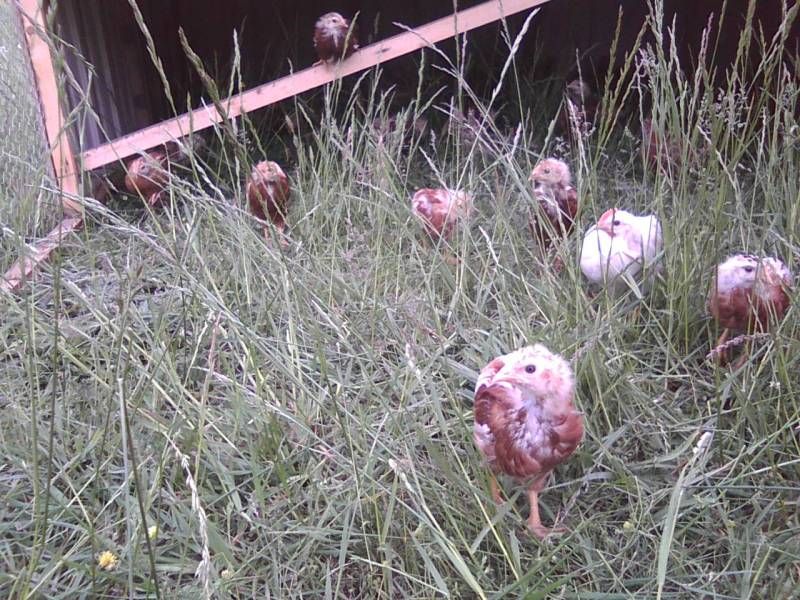
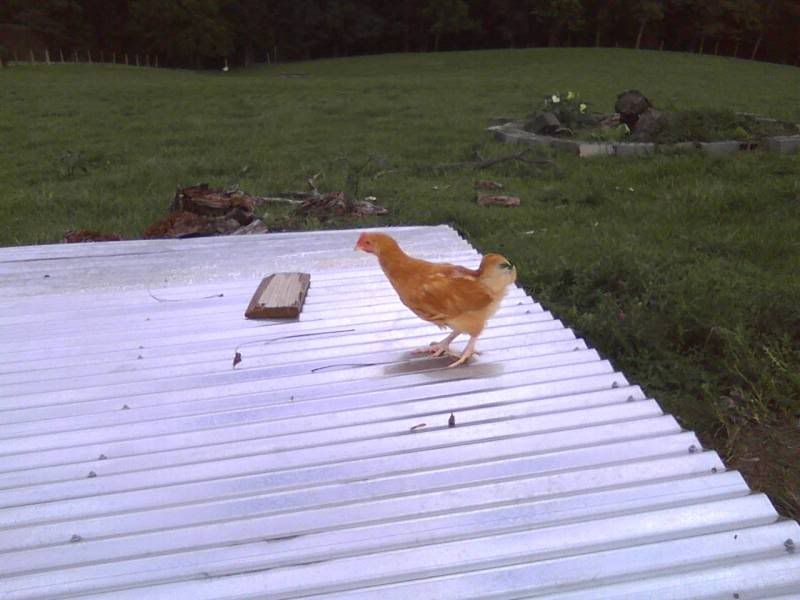
Golden Comet pullets... except we have one oddball chick in there. Not sure if it's a male GC or if it's another breed. Looks a bit like a Cornish Cross.

May 2, 2012

Mob grazing

We haven't posted much about cattle because there's not much to say. They are slow growing and have a long gestational period. They eat grass and hay. They moo. They walk around. Not very exciting. Not a lot to report on them unless something major happens such as new bottle-fed calves arriving or a sick animal.

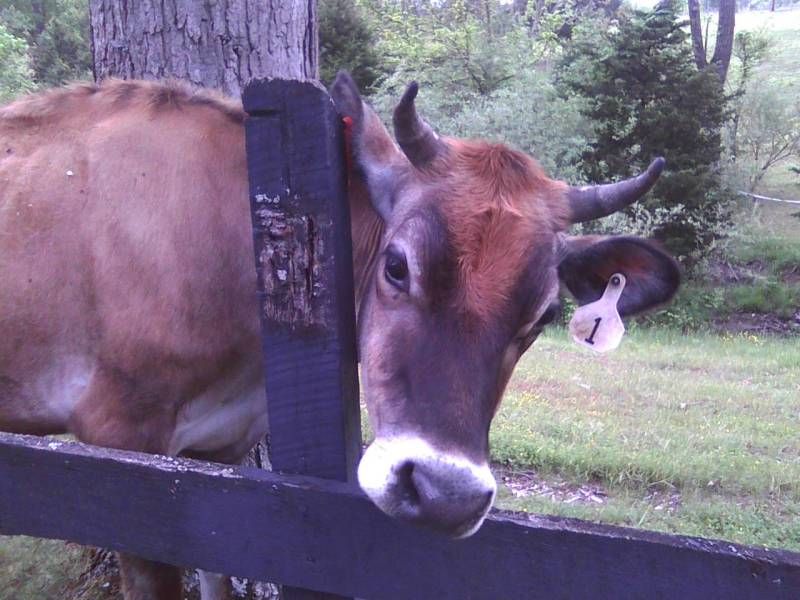
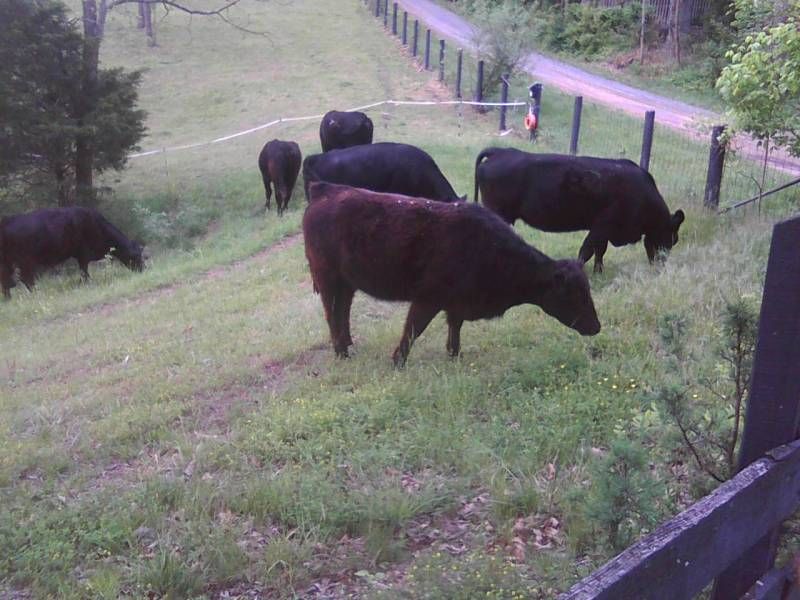
Right now, there are Jersey steers and dry Angus cows in the field.  The steers arrived here as bottle-fed calves in the winter of 2010/2011.  They are not growing quickly and Greg really wants to get some weight on them so they can be butchered this fall.

To that end, Greg has decided to take a new approach to managing the cattle during the spring and summer this year.  Typically, the cattle will graze on a very large pasture area for a long period of time, often for the entire season.  The cattle wear down that pasture and eat it down to the dirt.  It requires them to range over a large area, expending food energy that could be used to increase muscle mass and bring them to market weight much faster.

In comes the idea of "mob grazing".  This is also referred to as intensive pasture management.  I'm sure there are a few other catch phrase names for it, but we call it mob grazing.

The premise is simple. Reduce the amount of pasture the herd has access to, then move them to a fresh area as soon as they've eaten down one section.  Depending on the number of cattle in your herd and the size of the pasture area they are grazing, you might move them daily, every few days or weekly.  Your goals are: reduce the amount of walking, let the cattle eat down that area and let it rest and regrow before bringing them back to it, intense manure spread in a short period of time.

By utilizing this method of grazing, you are going to have more intense manure coverage in your pastures.  The cattle won't be walking over acres and acres and acres to find fresh growth of grass.  This will help them put on weight much faster.

Greg started this probably about a week ago. We've seen the cattle resting more - a sign that they are full and chewing their cud - instead of constantly wandering looking for new grass.  He hasn't had to put out any more hay.  They are getting fresh, tender, Spring grass.

Today, the cattle moved to a new section of pasture.  Only had to call them two or three times because once they realized it was time to move to new grass, they came running!

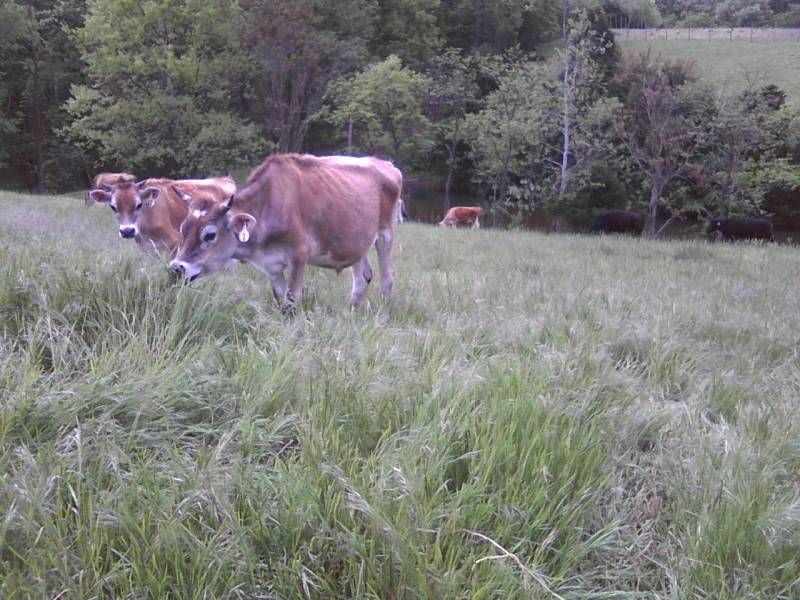
"Heads down" is a good sign during mob grazing. Everyone's eating and happy.

These are very slow growing dairy steers.  They are boney! We're hoping the mob grazing will put some significant weight on them.

March 22, 2012

Moving Day

All the chicks are now in pasture pens enjoying grass, bugs, trace minerals in the soil and lots of sunshine.  Greg finished construction on the new pen - and subsequently learned that he needs to build two more - and we were able to get all the chicks on pasture.  Now that the brooder is empty, we'll be refilling it with Golden Comet pullets scheduled to arrive on Monday.

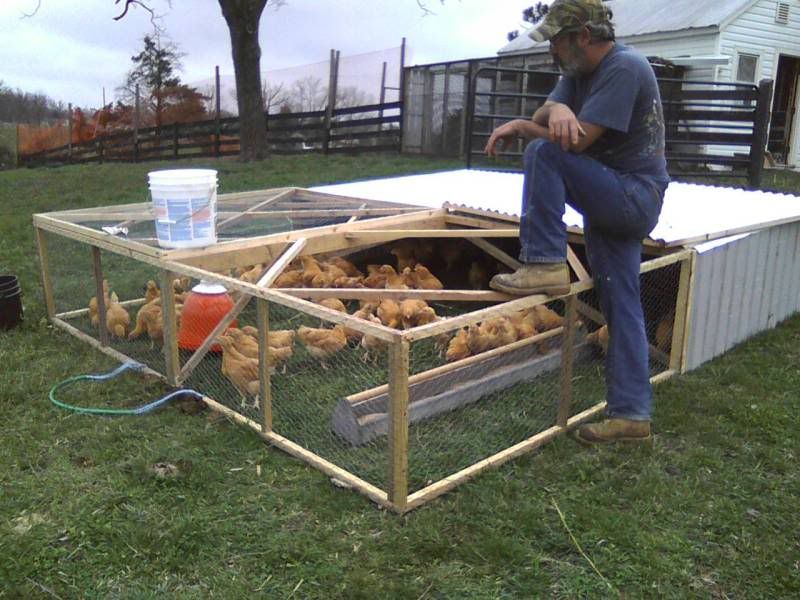
Finished pasture pen. Sides and roof made from recycled vinyl house siding


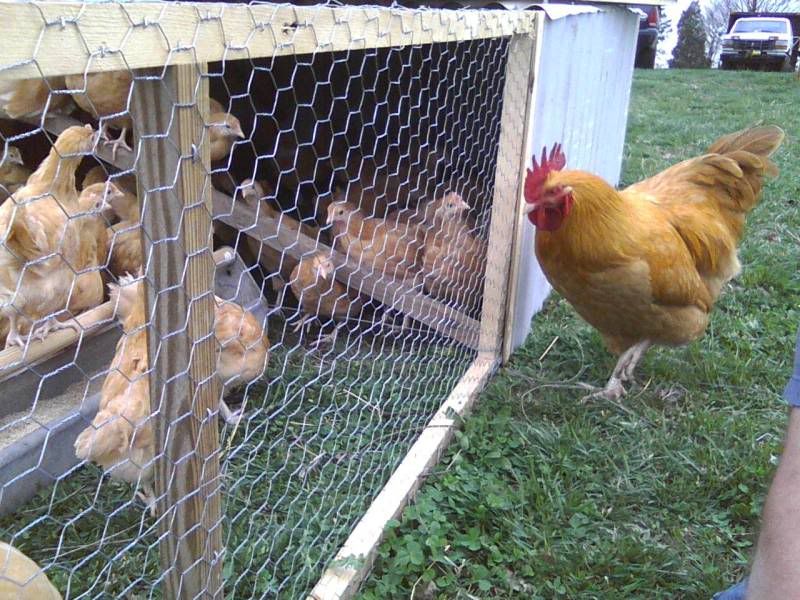
Free range Buff Orpington rooster from our laying flock
checking out the Buff Orpingtons in the pasture pen.

We now have two pasture pens filled with chicks.  However, one chick with a lame leg is in the barn in a small cage to limit his movement while he heals.  Once he's better, I need to decide whether to return him to the pasture pen or not.  Introducing a single "new" chicken into a large, established flock can prove to be detrimental to the lone chicken. He probably will not be accepted by the flock and will be pecked to death, bullied and not allowed access to food.  And if his leg never heals, he definitely won't be accepted by the other chickens. For now, I'll keep an eye on his healing and make a decision later.

October 2, 2011

Escapees

What a delicious view
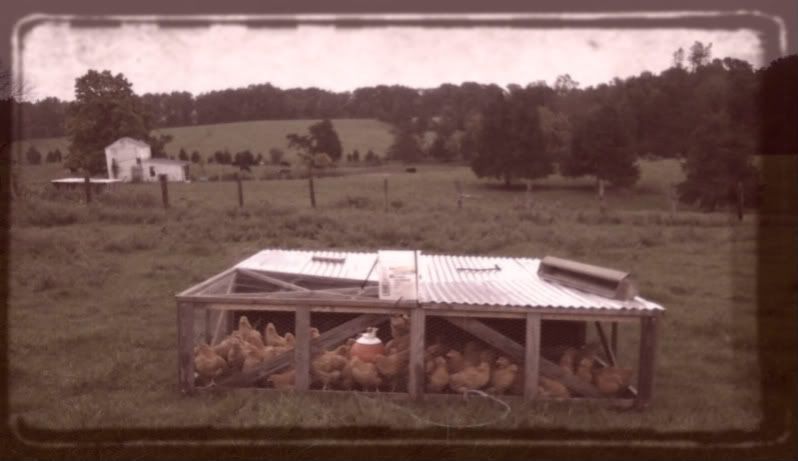
These are our Buff Orpingtons out in the pasture pen.  They love the fresh grass every day and are growing really well.  They are almost thirteen weeks old now.  They'll continue to grow larger for a few more weeks.  We'll be culling the cockerels and will most likely keep the pullets for our layer flock.  We have quite a few older hens who will be culled this fall once they stop laying. They'll be replaced by these pullets.

Because these birds are much lighter than the Cornish Cross were, they are energetic and are eager to roost and jump out of the pen.  Every time I try to feed them by myself, at least one escapes.  Mitchell, my seven year old son, was supposed to be helping me feed them today but was distracted by one of the barn cats. In the mean time, these chickens kept trying to jump out of the pen while I was trying to hold the roof up and grab the feeder out of the pen.  I was able to keep all but one of them in the pen.

Then, the chase began.  I let her walk around the pen. She stayed pretty close to it because she wanted the feed I had just put inside but she couldn't figure out how to get in.   I was holding the roof open with one hand so she could jump in, all the while trying to make sure others didn't jump out and try to catch the escapee with my one free hand.  My son just watched.

I finally got him to hold the roof up while I chased the chicken through the pasture. She finally made her way back in and went straight to the feeder.

I will admit that this is not the first time this has happened to me.

August 23, 2011

Pastured chickens

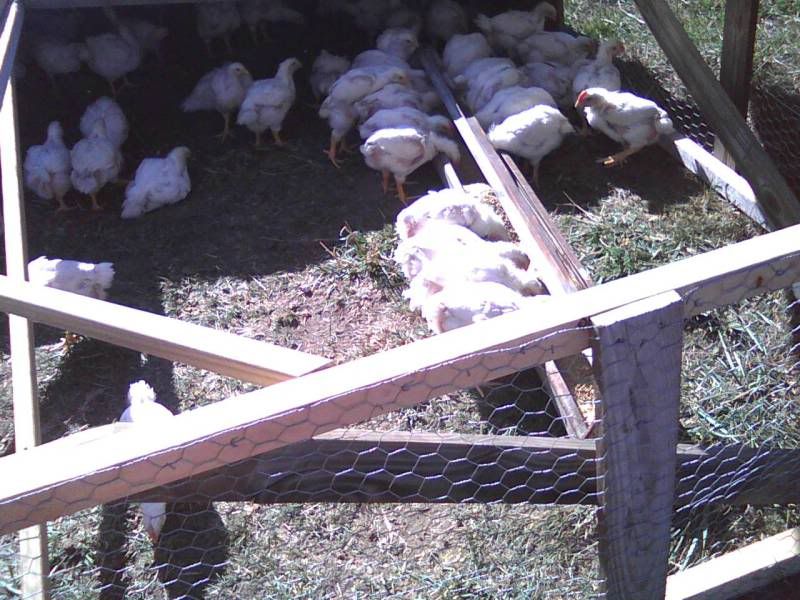
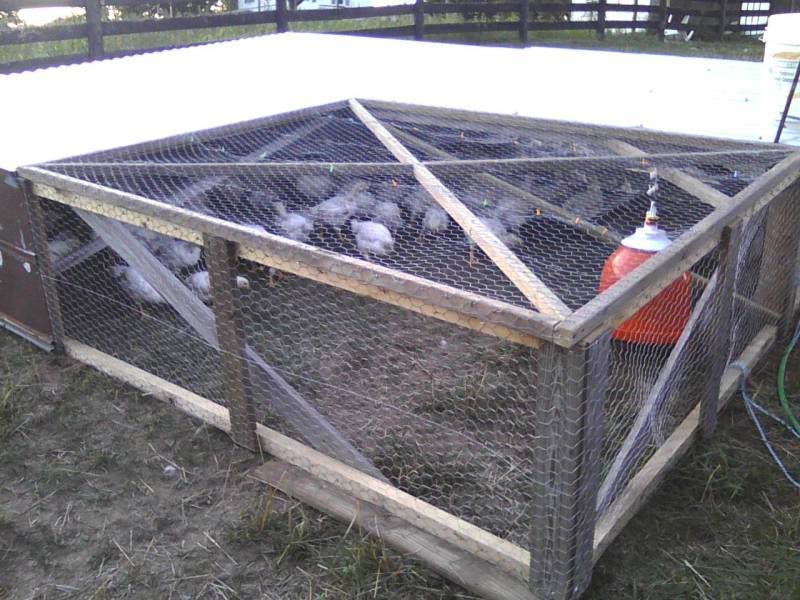
The Cornish Cross chicks are three and a half weeks old and are finally out in the pasture. They outgrew their part of the brooder stall about a week ago and were invading the Buff Orpington side daily.  It was really hard to keep their litter dry but wow is it composting well! How weird is it to be excited about composting chicken poop?

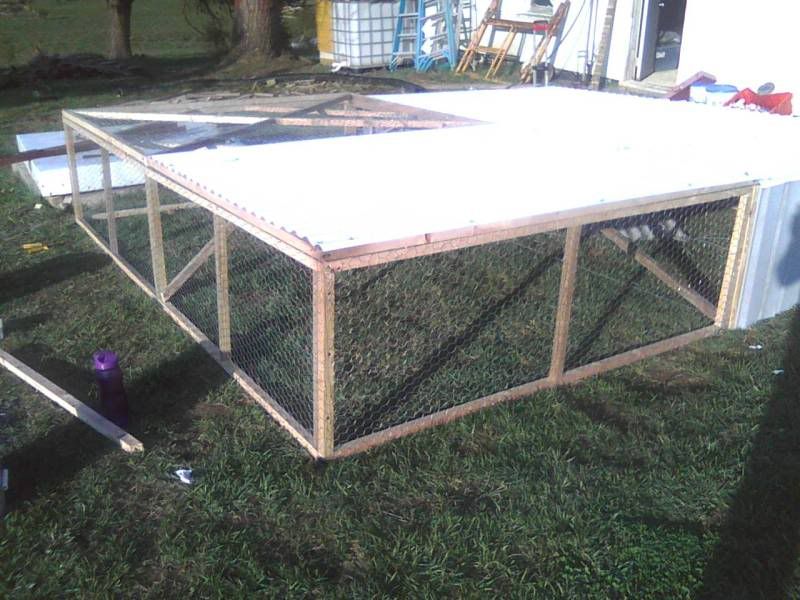
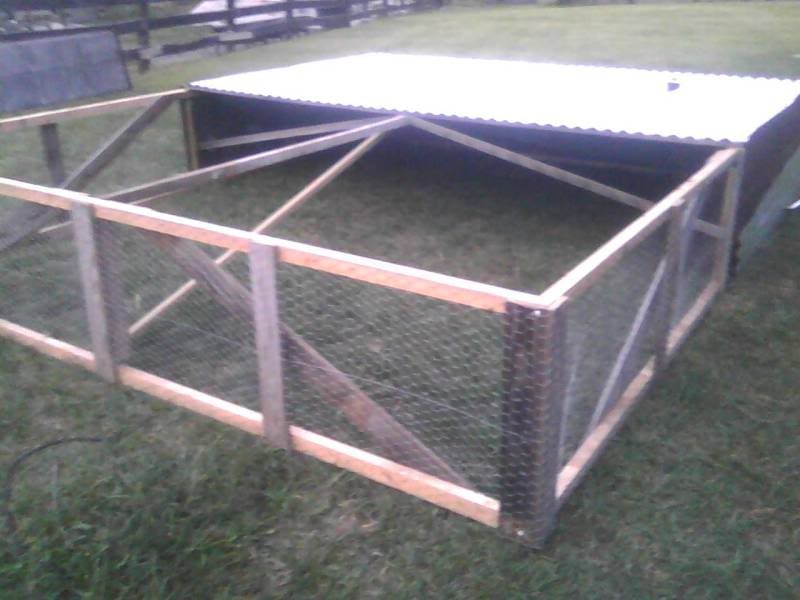
Greg built the pasture pen from scratch. I'm really impressed because he built it based on seeing pens at Polyface and looking at pictures in books.  I sure couldn't do it!  He did an awesome job on it. 

The pens are designed to give the chickens maximum protection from weather and predators while also allowing them to free range on grass and get sunshine and fresh air.  Not too shabby a life for a chicken! I could pull out my soap box and rant about factory chickens but it's not worth the effort.  I'm really proud that we are raising chickens in a humane, healthy and natural environment.  They aren't the most beautiful birds you'll see, but they will be so yummy!

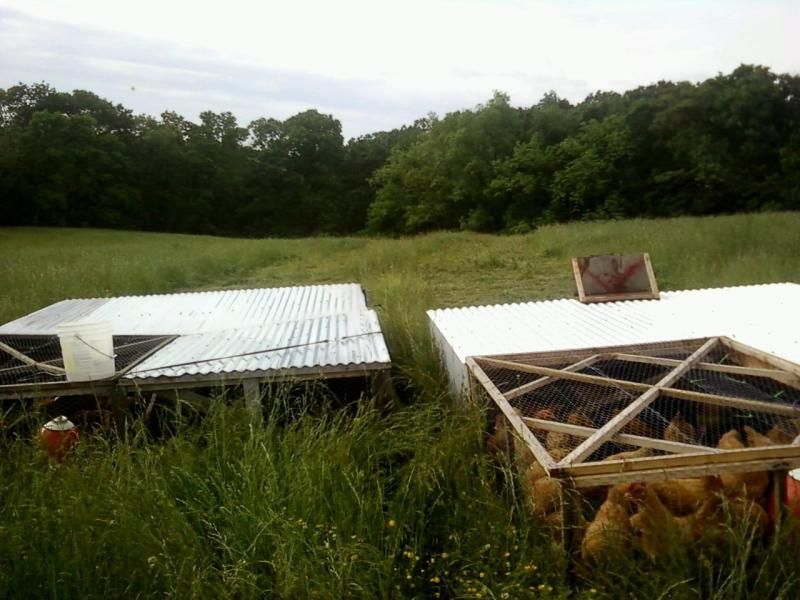
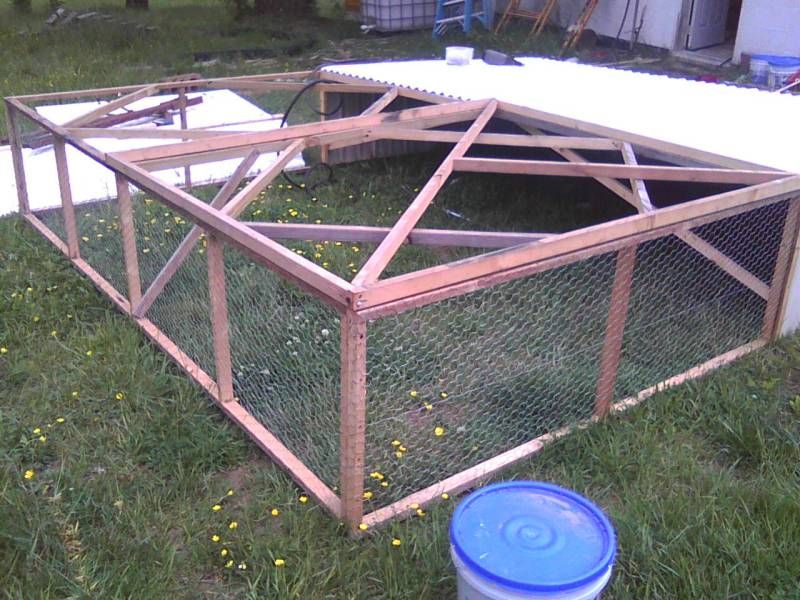
Out to pasture.  This section normally has a solid roof over it. It's open here so I could feed them.

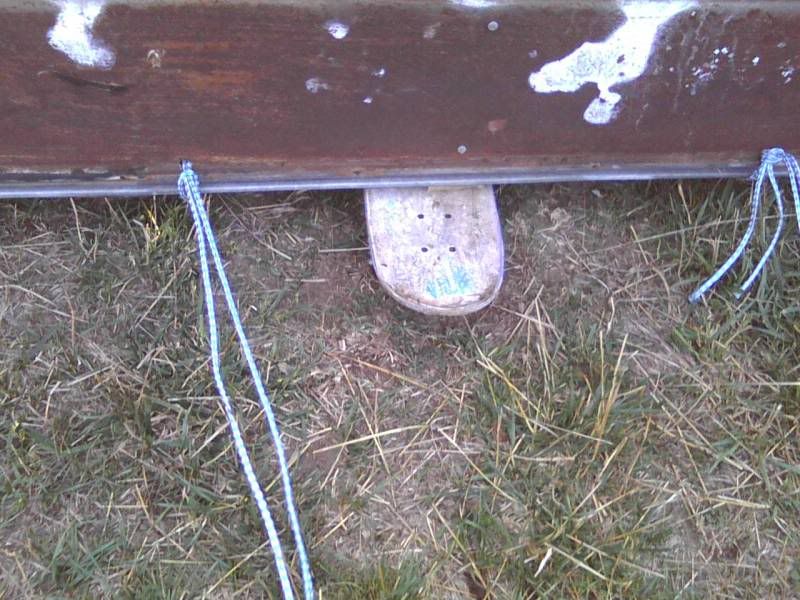
As for the construction of the pens, we went as redneck as possible.  Well, not really. Greg did recycle a lot which is pretty cool and helps keep costs down.  Old metal roofing was used on the sides, wood from a torn down privacy fence became support beams.  And Sammy's old skate board is temporarily being used to help transport the pen each morning when it's moved.  Eventually we'll have wheels or a dolly to help move it.  Greg sticks the skateboard under the center of the back, then goes around front and pulls the entire contraption forward twelve feet, very slowly.  As it moves forward, so do the chickens. 

Three quarters of the roof is covered for protection from the weather (rain and sun) as well as protection from predators.  The waterer is in the sun which forces these lazy birds out into the sunshine for the sun's Vitamin D.  The chicken wire roof and the metal roof to the right of it are both removable and are not permanently attached.  We keep a five-gallon bucket up on top to collect rain water.  The bucket feeds down into the waterer in the pen.  We haul water to it as needed but hope that rain will give us a hand from time to time.
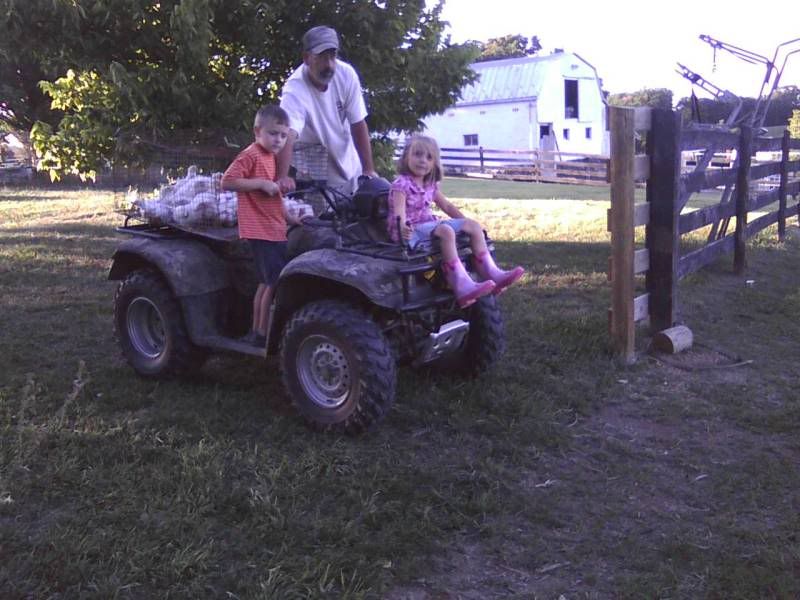
Transporting the chicks from the white barn out to the pasture.

July 19, 2010

Make hay while the sun shines

Most of the farms in the area have had pretty thin hay this year. Fortunately, Skyview hay was thick, high and bountiful. All the hay was cut, dried and rolled within a week. My buddy who cuts the hay already has the rolls sold and the money from the sale will go right back into the farm to prepare for cattle.

Not long after the hay was rolled, I found a great deal on a hay spear. Instead of moving one roll at a time with the tractor, I can now cut my work in half and move two rolls at at time. Efficiency is key when you don't have farm hands to rely on.

And tractor toys are cool.

June 30, 2010

Good fences need good gates

In order to bring cattle back onto this farm, I need to go back and start replacing all the gates that were previously sold.  At a minimum, I need three or four more. To replace them all, I need a baker's dozen at least.

I picked up these two gates in a trade for services: they gave me the gates in exchange for helping put up a horse run-in.  It's been a very hot month and those horses need a break from the sun.  These gates may not look like much, but they clean up pretty nice!