Showing posts with label rabbits. Show all posts

January 26, 2014

What does a fox say?


In our case, the fox said, "Dinner!"

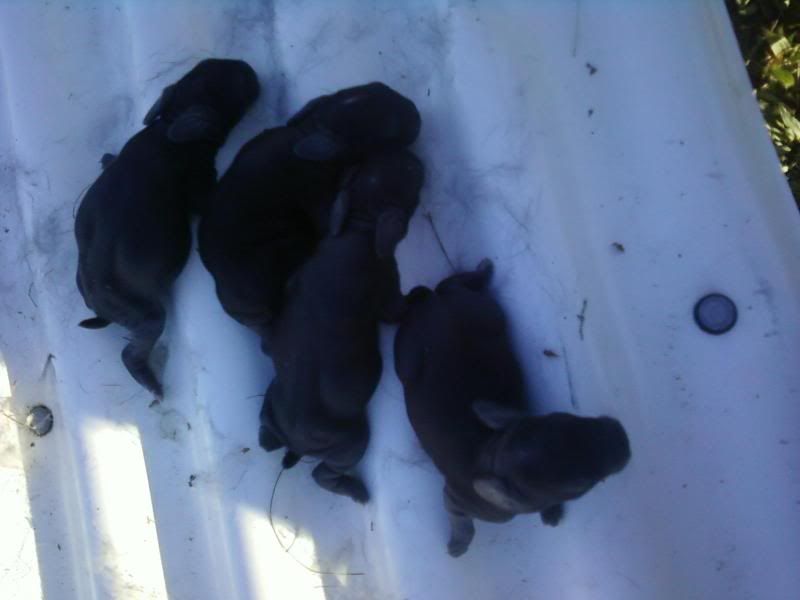
A fox dug at the edge of the rabbit pen and was able to snag a baby and pull it out.

Considering that we've have rabbits on pasture for two years now, I'm surprised this hasn't happened sooner or more often.

July 7, 2013

Print, Post, Win!

Our meat rabbit workshop/class/seminar is coming soon! September 7th isn't far away so we've decided to host a contest. 
  1. Print out the flyer
  2. Post it on a community bulletin board, at your local feed store, etc
  3. Post a picture of the flyer on our FB page or the FB event page. Tag the store where it's posted.
  4. Each time you post it, you're entered for a chance to win a New Zealand doe!
Be sure to register soon! The price goes up to $100/pp after July 30th.  You must be a registered attendee to qualify to win the NZ doe.

June 17, 2013

Meat rabbits workshop

We are still schedule to run the Meat Rabbits 101 workshop on September 7 here in Winchester, VA.  I know a lot of people are interested but not many people have actually registered.  To learn more and register, click here.

This is a full day workshop, great for preppers and homesteaders.  We'll cover everything from choosing a breed, questions to ask breeders all the way to breeding, kindling and butchering. 

If you have ever considered raising meat rabbits or if you'd like to learn more about it, sign up! We'd love to meet you!

We must have a minimum number of attendees by July 31.  If that minimum is not met, we will cancel and refund everyone's money.

So click! Register! Tell everyone you know!


June 16, 2013

Homesteading Days Workshop

When we first started raising rabbits over a year and a half ago, we really weren't sure what we were doing.  We figured, "They're rabbits. They'll multiply ..... like rabbits!"  It's pretty easy to breed them but to successfully breed rabbits and grow them out to butchering size you need a bit more knowledge.  There were so many times that I wished we had someone we could talk to about our little rabbitry; someone to ask questions and bounce ideas off of them.  We would have benefited from a mentor but no one wanted to share information with us.

Since then, we decided to share our experiences, good and bad, and the knowledge and resources we attain with anyone who asks.  When we sell breeding stock to others, we encourage them to let us know how things are going and to let us know of their successes and problems.

Because of this pay-it-forward mindset, we were very excited when we were asked to step in as substitutes for a local Homesteading Day seminar on meat rabbits.  It was short notice, but we were happy to step in and help out.  What a great experience it was for us!  And we hope it was as equally fulfilling for the attendees!

We covered as many topics as we could cram into the short session: Equipment, breeds, evaluating stock and breeders, feed, common health issues to watch out for, how to breed (with a live demonstration courtesy of our buck, Stop Asking, and doe, Silverado), kindling - what to expect, how to handle problems, growing out the kits and how to butcher.

The big event was the butchering.  Greg demonstrated how to dispatch the rabbit and process it from start to finish. Then each person was given the opportunity to process their own rabbit, take it home and fix it for dinner.  We were processing rabbits until 6pm.  That's quite a bit later than we anticipated but we wanted to make sure everyone who wanted to try it had an opportunity to do so.  For us, the highlight was watching Greg's daughter and another thirteen year old girl jointly process a rabbit.  It was great to watch them confidently take on the task.

After participating in this short session, we're really excited about the full day workshop we have planned for September 7.  I felt like there were so many topics we skimmed over or missed entirely due to time constraints.  All in all, it was a really great day and we're so grateful for the opportunity to educate others.

April 4, 2013

Nesting box swap

It seems my teachers were right. There will always be a use for math in my adult life.  When you raise rabbits, there's a lot of multiplication happening, that's for sure!  But this past week has been filled with addition and subtraction making sure everyone is where they need to be.  Let's look at the numbers...

Typically, we hope for our does to produce seven to nine kits per litter.  That's the ideal litter size for us.  Because a doe only has eight nipples, excessive numbers of kits means that you have to watch closely for any kits falling behind in feedings.  Even litters of ten give me cause for concern during that first week of life.  I check the kits several times a day to make sure they are being fed.  RabbitTalk.com has some great photos to help you discern if your kits are eating or not.

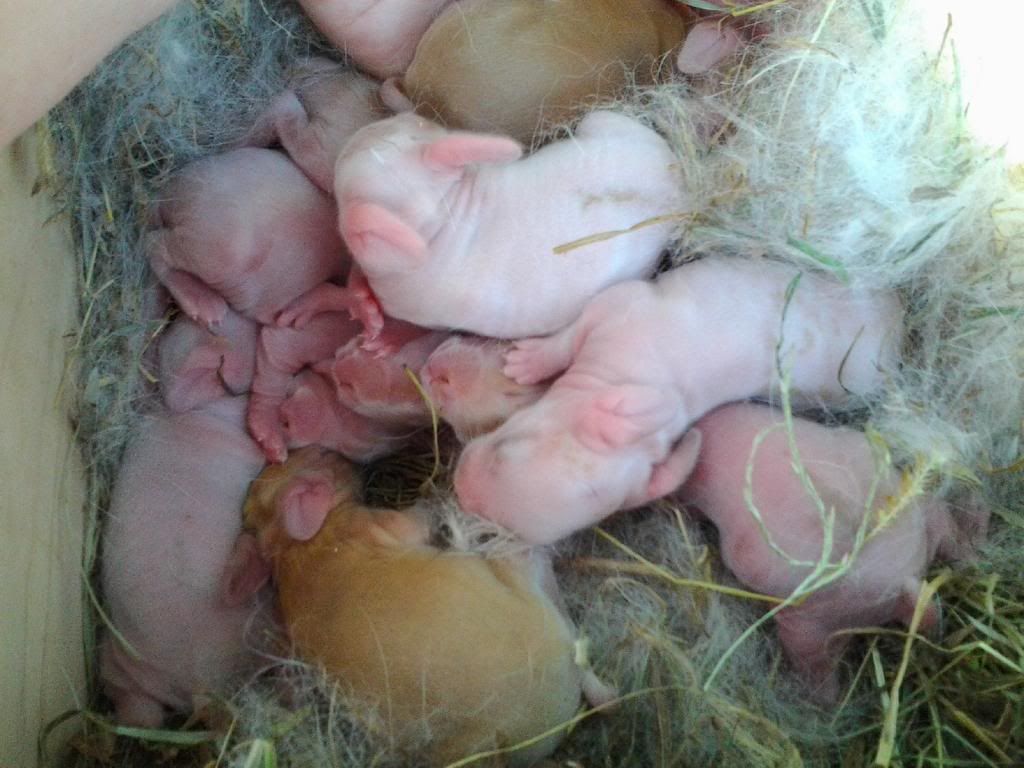
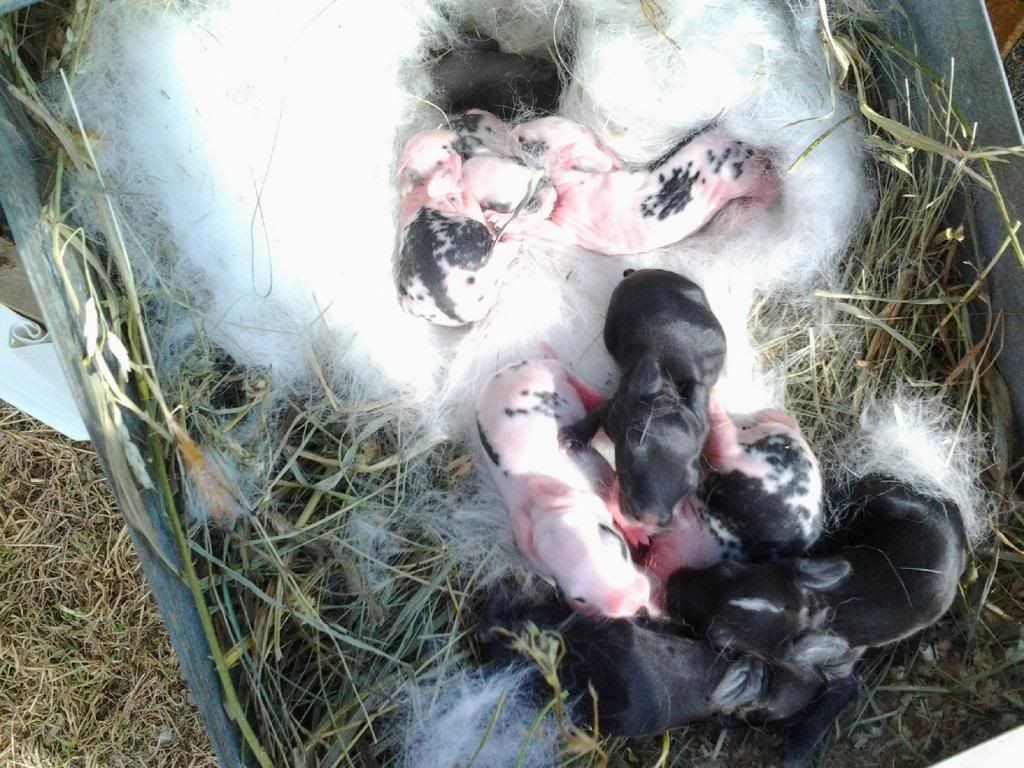
Silverado is an eleven month old Am Chin x NZ Champagne mix doe. She's a meat mutt.  She is an excellent producer and wonderful mother.  She just kindled her fourth litter this past week - an amazing litter of fourteen kits. Yes, fourteen!  There are many people who would jump up and down with joy at such a large litter.  Based on the numbers, that's basically two breedings and pregnancies in one litter.  I'm not too thrilled about it though.

Larger litters mean smaller birth size, slower growth, more possibility of loss, difficulties keeping all the kits fed until they are weaned. 

There's no way that this nest of kits can all keep fed if we left them all in the nestbox together.  This many kits means there will always be weaker kits shoved to the bottom of the pile.  Those kits are more likely to suffocate or never make it up to the doe to eat when she comes in to feed them.  The solution? The nestbox swap.

Seven kits were put in a different nesting box. Does feed their litters twice a day. Kits can survive on only one feeding a day.  Two is better, but one can suffice.  At night before bed, Greg takes out the one box (those kits received the evening feeding) and puts in the other box.  The second box of kits will receive the morning feeding.  Then he swaps them back again during the day to start the cycle over again.

This ensures that all fourteen kits are eating well and growing.  It also gives us added incentive to check them several times a day to make sure they are doing well.  In the wild or without any intervention, most of these kits would die.  If we were pure naturalists, we'd let nature take its course. But I can't. I know that with some additional effort on our part, we can raise fourteen rabbits.  Hopefully the fast growing genes from the sire will help compensate for the smaller birth size of these kits and they'll come to butchering weight right on schedule.

When I started counting the kits in that nesting box, I thought for sure they were tumbling back into the nest and I was recounting the same kits over and over and over.  It was like a never ending clown car!

March 24, 2013

Does who don't

This winter, we had quite a few does who failed miserably as mothers.  They had litters on the wire instead of in the nesting box and they didn't feed their kits.  Now as second time mothers, we changed our normal routine and give them some additional assistance.

Nesting on the Wire
When a doe is ready to kindle, she starts building a nest. This usually indicates that she'll give birth in a couple days or less. One of the last things she will do is pull her own fur off her body to line the nest and keep the kits warm. Normally, she'll do all of this in the nesting box you give her.  Usually, but not always.

There are so many ways nesting can go wrong - building a nest on the wire, giving birth on the wire without any nesting materials, not feeding the kits, not pulling enough fur to keep them warm, etc.

To help prevent some of these issues, here's what we do:
  • Give the doe a nesting box three days before she's due. We give her the box on day 25. 
  • Stuff the nesting box completely full of hay.  We also put 1/2" to 1" of wood shavings in the bottom for insulation and to absorb fluids.
  • Save fur and dryer lint.  There will be does who nearly bald themselves by pulling so much fur. Save it! Put it in a Ziplock bag and save it for the doe who doesn't pull enough fur or pulls it a day after kindling. If you don't have extra fur, save your dryer lint and use it instead.
  • Move the nesting materials.  If your doe is trying to build a nest next to the nesting box, take everything she has built and put it in the nesting box. Do it every time you see her building the nest.
Where Are My Babies!
Another issue we've had is does who don't feed their kits. We have lost too many litters because the does didn't feed their kits.  This has happened when the doe kindled in the nesting box but it usually happens when she kindles on the wire and we move the kits into the nesting box.  Even though she will watch us move them, then sniff them in the nesting box, it's almost as if she can't find her babies.

To combat this, physically lift up the doe, place her over the kits in the nesting box and gently hold her there for a couple minutes.  Check the kits to be sure that they have nice, round bellies, and let the doe go. Usually, this will be enough to make things click and she'll keep feeding the kits. But if she doesn't, repeat at the next feeding time or the next day.  Remember, although more is better, the kits will be fine if they only eat once a day.


I can't say we'll never lose another litter, but I'm confident that these best practices will give the does and kits a better chance of a successful kindle and litter.

March 12, 2013

Rabbit tractors

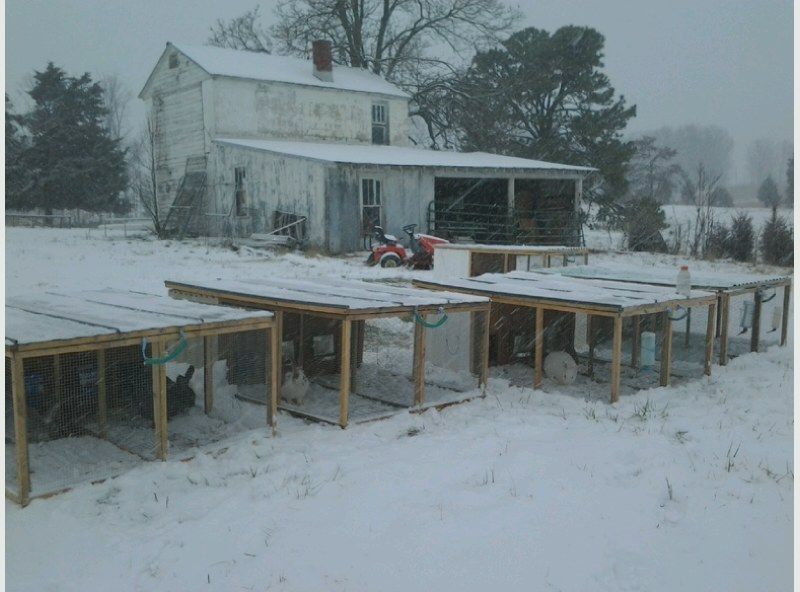
Skyview Acres' rabbits are raised on the ground, on fresh pasture daily.  We studied a lot of chicken tractors, checked out Polyface's and Nature's Harmony's rabbit tractors, and started brainstorming for a design we liked.

Considerations:
  • Hutch for kindling and protection from weather and predators
  • Enough grass area for a doe plus her litter
  • Keeping pellet feed dry during the rain
  • Easily movable
  • Seasonally friendly - not too hot in the summer, protection from snow and cold in the winter
  • Durability
 We searched and searched all over the internet to find others keeping rabbits on pasture but we didn't find very many examples.  So we got creative and started building.

The first version rabbit tractor was huge - 6'x4'. The hutch had a solid floor. We only put wired along the perimeter of the base to keep the rabbits from digging out.  It was very, very heavy.

First rabbit pen
For the second rabbit pen, we used the same basic design but left half of the hutch floor as wire.  It was the same size and was built to house one doe plus her litter.  Even with some design modifications, it was still pretty heavy.

The third had a full wire floor for the hutch and the wood was ripped down to more manageable sizes so the overall pen was lighter.

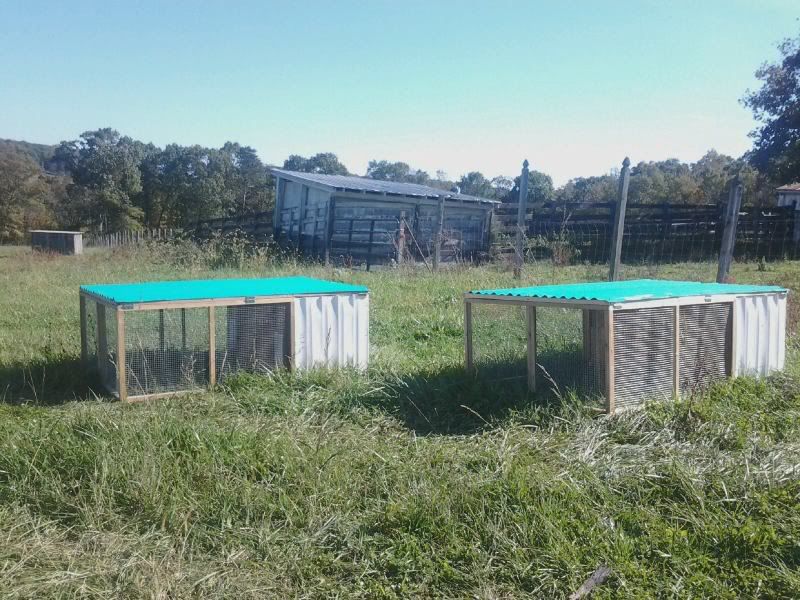
At this point, we realized we were going to need a lot of pretty large pens if we continued with this design.  Eventually, we made it to our final design: a single pen split down the middle so it housed two rabbits with their own hutches and grass area.  The hutch doors were on placed close to the outside of the framing so the feeders could be attached to the hutch close to the center divider. This helps keep the feed protected from rain even during very windy storms.  Having the hutch doors to one side also gives the nesting boxes a little more protection from cold winds; boxes are placed against the center divider, not in front of a door.  The final big change was putting 1" sq wire along the entire bottom of the pens.  This keeps the rabbits from digging out and keeps predators from digging in.


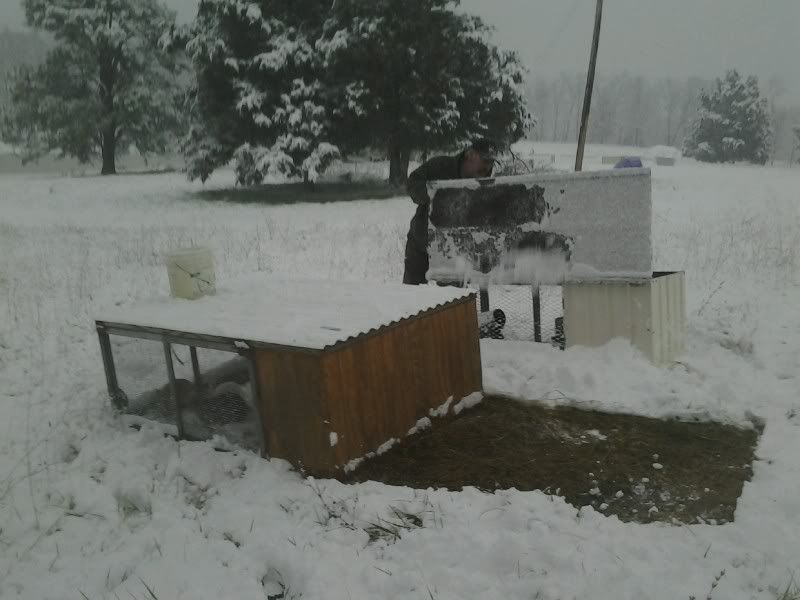
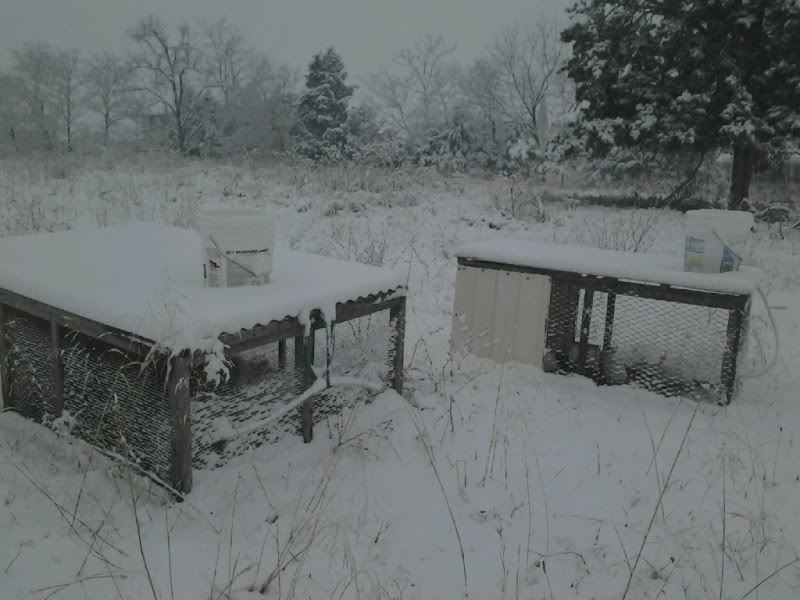
We're pretty pleased with the final version of the rabbit pens. They're lightweight and can be easily moved each morning to new grass.  The rabbits have room to run and are able to hide out in the hutches if they choose.  There are only two challenges we're working on - the lids are too lightweight for strong winds if we use vinyl roofing and trying to move the pens in deep snow is pretty much impossible.  Right now, we put old tires on the roofs when the wind is 15mph or higher.  We're still working on the snow issue.  Fortunately we didn't have a lot of snow this winter so we have a few seasons to think about some solutions.

We're in the process of writing up construction plans for the pens. We'll let you know when they're ready!

March 5, 2013

Rabbit tracks

Green grass in a field of dead grass.  This photo clearly shows the path that a couple of our rabbit tractors took down through the pasture this fall.  It's the only green grass to be seen!


February 24, 2013

Inexperienced does

The first time a doe kindles (gives birth) I worry.  I worry a lot.  Will her instincts take over?  Will she have the kits in the nesting box where they can stay warm? Will she have them on the wire in the hutch?  Will she make a good nest? Will she pull enough fur to keep her kits warm?  Will she feed them?

This past September, we purchased a dozen young does. Some we bred early and the rest we waited to breed for various, boring reasons.  The younger does did a marvelous job as first time mothers.  They all made good nests.  They all pulled enough fur to keep their kits warm.  They all remembered to feed their babies twice a day.

The older does, however, have been giving us fits.  They are constantly having their kits on the wire, not pulling enough fur and then not feeding their kits.  We've lost a lot of litters this year due to these inexperienced does.

When the does kindles on the wire, right next to the nesting box, we put the kits and fur into the nesting box. Inevitably, the does don't feed their kits and they starve.  With these last few litters that were kindled on the wire, we tried something new.  After putting the kits into the nesting box, I pick up the doe and hold her over the kits in the nesting box so the babies can nurse.  I tried this for the first time yesterday.

I was very nervous about checking the nesting boxes this morning. I was expecting more dead litters.

Instead, I was treated to healthy, wriggly kits with full bellies. It worked!  I feel like we have overcome a huge hurdle.  When these does have their next litters, hopefully they'll remember the box where they fed their kits and will build nests there instead of on the wire.


February 17, 2013

Preppers and rabbits

It seems more and more, we're meeting people who are "preppers."  What is a prepper? A prepper is someone who is trying to live a self-sustainable life, preparing for either end times, cataclysmic disaster or simply wanting to be prepared in case of any type of emergency that would limit access to necessities.

Not surprisingly, meat rabbits are part of the prepper planning.  They can be raised in a relatively small area, grow-out to butchering weight in a relatively short period of time, repopulate quickly, and they're very quiet.

Whether you live in a small house or apartment or if you have a large farm property, you can raise rabbits.  A basement with windows, a spare bedroom or a garage can all be turned into mini rabbitries.  With a hanging cage system, it's relatively easy to build waste disposal systems that make cleaning a breeze.  As long as you stay on top of cleaning out manure and waste, there is no smell at all.  All that waste can be used as fertilizer in your home gardening, or you could even barter with it or sell it. Rabbit fertilizer is great for gardening. Add in growing your own fodder as rabbit feed and you are well on your way to self sustainability.

With most livestock, you have long grow-out periods. Cattle can take up to two years - or more if they are exclusively pasture fed - to get to butchering weight.  Pigs are typically butchered at approximately 200 days. Chickens have a short grow out period - usually around 47 days - but they require a lot more room and tend to be much messier and noisier than rabbits.  We butcher our rabbits at 5 to 5 1/2 lbs live weight. This is usually around 12 weeks of age.  By the time they have reached 12 weeks old, their dam has already had at least one more litter, if not two.

Yes, the DO multiply like rabbits.  Our does consistently give us litters of eight or more kits with each litter.  There are breeding techniques to help ensure you have large size litters. There's a wide range of advice on when to breed back your does.  In the spring and summer, we have an aggressive breeding schedule.  If you're breeding for personal consumption, determine how quickly you eat rabbit, add in grow-out times and decide how often you need to breed your does.  Does are capable of breeding year round.  You don't want to wear out your does or cause them harm so I don't recommend pushing them to maximum reproduction capabilities.

For the prepper lifestyle, rabbits make a very attractive food source.  For anyone who is interested in a healthy, lean, delicious meat, rabbits are the way to go.  Planning on prepping and need rabbits, let us know. We'll help you get started, point you to some great online resources and teach you how we raise rabbits on pasture.

U P D A T E !

Due to the overwhelming response to this blog post, we have decided to hold a Meat Rabbits 101 workshop in September 2013.  Click for details!

February 10, 2013

New rabbit growout pen design

Our kits are growing quickly and we're in need of more and more growout pens.  Greg added a hutch area to this version of our homemade growout pens.  With the fiercely cold temps we've had this winter, it's been reassuring to know that the rabbits have a little additional protection from the weather.


This is the first grow-out pen with an enclosed hutch area. Originally, we felt that leaving the entire pen with access to grass was a better idea. However, with so much rain at near freezing temperatures and the snow we've had recently, we decided the kits needed to be able to get off the ground.

January 7, 2013

Sneak a peek

Santa brought me a camcorder for Christmas. That means I can give you a peek into how the farm runs.  Right now, not a lot is going on with the farm except with the rabbits so we'll start there!

Pastured rabbits from Skyview Acres on Vimeo.

December 30, 2012

Frozen water bottles

Snow brought freezing temperatures to the area this past week.  We have been dealing with frozen water bottles all week.  The first snow day was quite a challenge. Chores took three hours and involved a lot of frustration. 

We water our rabbits with three different types of waterers: gravity fed water buckets on top of the pens, traditional water bottles, and homemade water bottles using a brass nipple and a smallish Gatorade or other bottle.  None of them remained free of ice.  The tubing for our gravity fed water buckets froze.  The brass water nipples froze.  Water in the buckets froze.  Water bottles froze; some cracked.  We ran out of replacement bottles for the pens using water buckets.

The temperatures have remained right around freezing since those first two days when the snow hit. Because the temps haven't fallen drastically, we haven't had nearly as much ice in the bottles or buckets.  Most of the waterers remain flowing throughout the night.

So. How did we combat the ice-up?  We pulled water bottles, soaked them in warm water to thaw the nipples and melt the ice, then refilled them with hot water.  The bucket systems were given a new nipple so we could use the original brass nipple to make more home-made bottles. We took buckets of hot water into the pasture to soak the tubing and thaw it out.  Sounds simple enough but it was very time consuming and labor intensive and stressful.  At first, we didn't have enough unfrozen watering devices and resorted to giving the rabbits a few snowballs to munch on. This was not optimal, by far.  Eating snow for hydration is a solution that will quickly lower a body's core temperature and bring on hypothermia.

Our long term solution is to buy more bottles and nipples, have more bottles on hand and make more of our home-made bottles using the nipples. Then simply fill the spare bottles with hot water, put them in a cooler and swap them for the frozen bottles.  Frozen bottles will be brought up to the house, thawed and prepared for the next switch.

Rabbits on pasture, 365 days of the year. Makes for some creative, albeit stressful, problem solving.

December 24, 2012

Pastured rabbits on snow

Last year, we began raising pasture-fed rabbits in January with a breeding trio. Greg built the pasture pens for them with a goal was to keep the rabbits on pasture year round. The does kindle in the pasture pens; the litter remains with the doe until weaned, then moved to a grow-out pen; the rabbits remain outside, year round, no matter what the weather.

We had a relatively mild winter last year with very little snow. It was pretty cold, but no precipitation really. This past year, we survived a derecho, a hurricane, extreme summer heat and some below freezing temps.  We have learned a LOT about dealing with the weather and how to work with it while keeping the rabbits on grass. But the weather we've been dreading is snow.

Freezing water bottles in the winter are a pain to deal with but we can manage. Trying to move 6' x 4' pens over inches and inches of snow... ugh. We really were not looking forward to dealing with that.  We couldn't leave them in one place and allow waste to accumulate. If not moved, they'd run out of grass in a day, two at the most.  Fresh grass daily is critical to the health and well being of these rabbits. Well, it snowed today. So far we have three inches and it's still coming down in buckets.

We moved the large grow-out pens to new snow-covered grass because they have an actual hutch where the rabbits can get up off the snow. Their body heat keeps them very warm in the hutch area so we're not worried about them resting on the cold snow or eating the snow and lowering their body temps. The smallest kits which are about 5 or 6 weeks old were left on the snow-free ground. We gave them a couple snowballs to chew on for water but not a lot since we don't want to drop their core temperature too much.

One doe has a 10 day old litter. I put extra hay over them for additional warmth but they should be fine. We have three does due to kindle. Double checked that they had plenty of hay.

Now, we wait and see what happens.

December 4, 2012

DIY rabbit feeder step by step

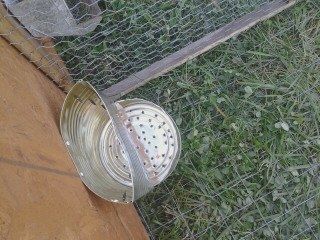
Quite a few people have shown an interest in our coffee can rabbit feeders. I love recycling and I also love saving money so this project is doubly awesome.

Start with a large metal can

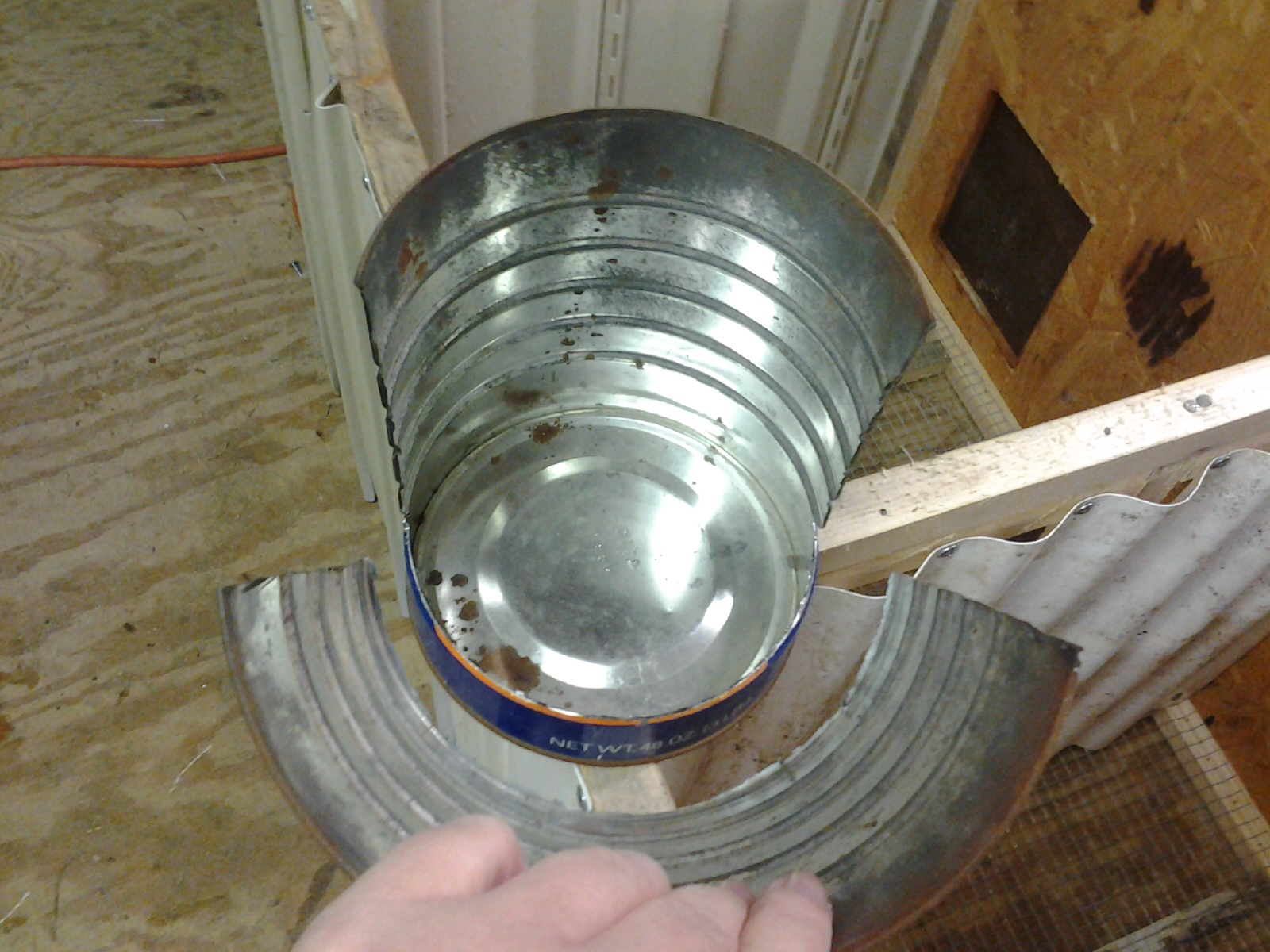
Cut down the length of the can, down to the bottom ridge before the metal stops having ridges. Use that bottom ridge line to cut horizontally.  Make your final vertical cut so that you are cutting away the front half of the can.

Front half, cut off

Use pliers or a metal crimper to fold in the rough edges

Take your time and really make sure all the edges are smooth

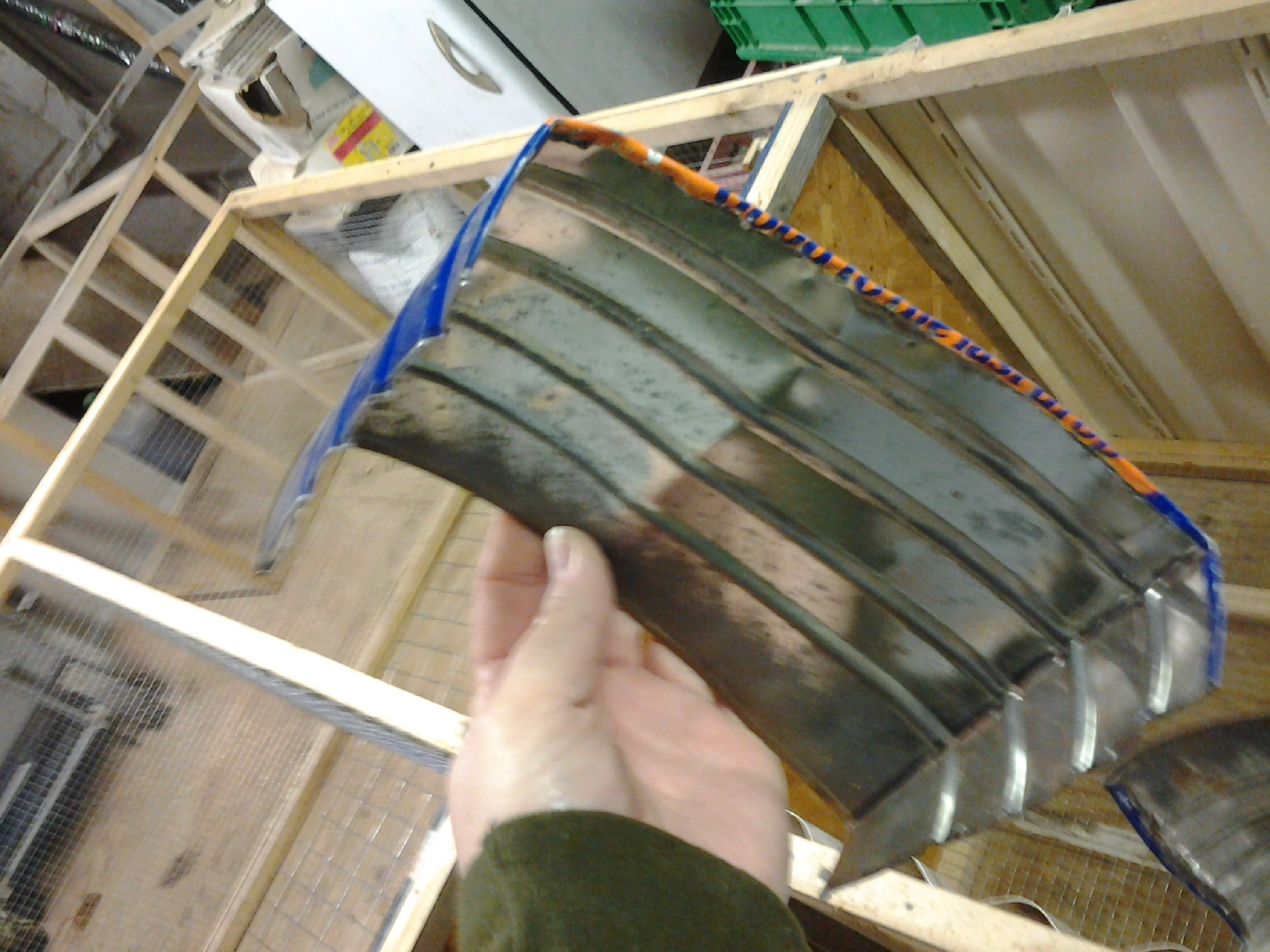
Flatten out the front half of the can you previously removed

Drill holes in the bottom of the can. Lots of holes.

Crimp the rough, horizontal edge. Hold your flat panel up to the remaining can and
eyeball-measure where to bed your metal

Attach the flat panel

We used screws but rivets work as well

Attach to the cage.
You can add wire to the can and affix it to a cage like a normal j-feeder

November 28, 2012

All quiet on the homefront

As winter settles in, the farm settles back into a routine. Not as many urgent issues need to be addressed, shorter days mean less time outside working and most of the animals are on auto-pilot for a while. The pigs are eating, snorting and digging around. The chickens are making nuisances of themselves. The cattle are out there, somewhere, eating grass and drinking water. The rabbits are really the only livestock that keep us hopping (ha!).

Running the log splitter
We now have three litters of Silver Fox rabbits. The more I handle these rabbits, the more I like them. They are very docile and, so far, great mothers to their litters. The first litter has been weaned and we have two more litters in nesting boxes. Maybe I'll hold back a couple does out of the next litter to keep for ourselves. Our New Zealand meat rabbits have started dropping litters too. We now have 15 working does. And when rabbits do what they do and start multiplying, we're going to have a lot of work!

While the days are a bit quieter during winter, there's always work to be done. We recently started making our own J-feeders for the rabbits and we've also started making our own water bottles for them. Huge cost savings! Hunting season is in full swing. We've had several deer to process and even a wild turkey.

Winter is also a good time for us to get ahead catch up on all our paperwork and construction. There's always one more thing for Greg to build and it's usually rabbit related. We're also trying to find time for Spring planning (I've been using a seed catalog for my Christmas wishlist.)

Even though it's a big quieter on the farm, there's still plenty happening and lots of work to be done.

October 19, 2012

More rabbits on pasture

Over a month ago, we purchased a dozen New Zealand does. As with all our new rabbits, they were put in a quarantine area away from the rest of the herd.  We sold one doe but the rest have been in cages on grass. The weather has been pretty mild so they didn't need much protection from the elements.  We had a cold snap though so getting them into pasture pens was top priority.

Two new pasture pens, each divided down the center giving us four rabbit holes
The pens are designed to house one mature doe plus her current litter in each half of a pen.  We need four more of these to give each doe her own hutch.  The frames are built and one is almost complete except for roofing. 

Does are pretty territorial about their spaces but because these does have been kept together since birth, they are okay with each other. As they continue to mature, they will need to be separated.  But for now, they're okay with sharing their spaces.

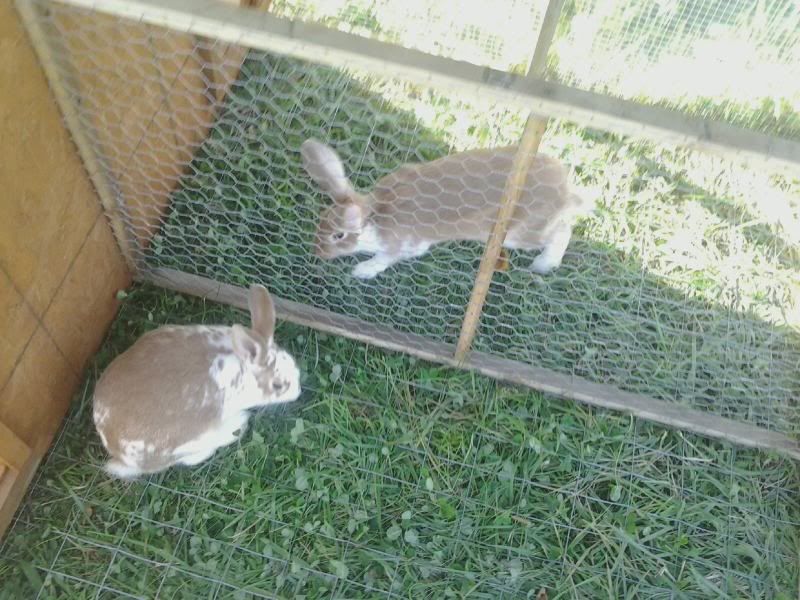
Broken red New Zealands

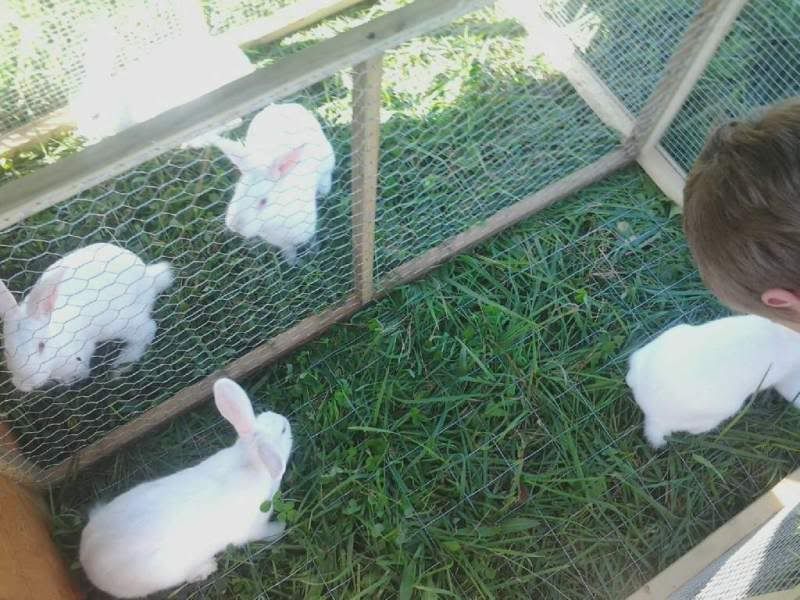
White New Zealand does - and a curious kid's head

October 18, 2012

Bloated kits

A doe rabbit will feed her kits (babies) once or twice a day.  Once is sufficient although the kits will complain a bit when they get hungry.  The first few days after kindling (the doe giving birth) are critical in kit growth. Kits that don't get enough milk will fall behind in growth very quickly.

This past week, we had three does kindle for a total of 20 kits.  The first doe to kindle was Rosebud, an American Chincilla, bred to Davidson, a New Zealand/Champagne cross (we think).  She had 8 kits with no runts.  However on day three, I noticed that two of the kits seemed a little bit smaller than the others.  Then yesterday, I was able to tell a significant size difference. The rest of the litter was twice the size of these two.  It appeared that they were being pushed down to the bottom of the nest by their stronger siblings and weren't getting as much milk.  If this continued, they would grow weaker as their littermates grew stronger and they would eventually die.

On the other side of the pasture, one of our Silver Fox does kindled a small litter of four kits.  All looked healthy and well.  On day two, they started looking a little too fat though. 


These kits look bloated.  If you look closely, you can see how their bellies are too fat, protruding on the sides.  They are eating too much.  Because there are only four kits and eight nipples, the doe has too much milk for all these babies.  They don't know to stop eating so they end up gorging themselves. We experienced this earlier in the year with another litter.  At the time, we didn't understand what was happening and ended up losing quite a few kits because of it.

There are two solutions to this problem: 1) Take the nesting box out and only allow the doe to feed the kits once a day until her milk supply settles down and adjusts, or 2) Put the two small kits from the first litter in with these kits.  This will give the small kits a better chance of getting nourishment - less competition from kits the same size as they are with a doe that is producing a lot of milk.  And it will keep the Silver Fox kits from overeating because there will be less milk available to them.

We put the small kits in with the small litter and will check this morning to see if our plan is working.  Fostering kits from one littler to another is always a great option.  When the kits are so young, the doe usually accepts them as her own and doesn't have a problem raising them.

October 14, 2012

DIY rabbit feeders


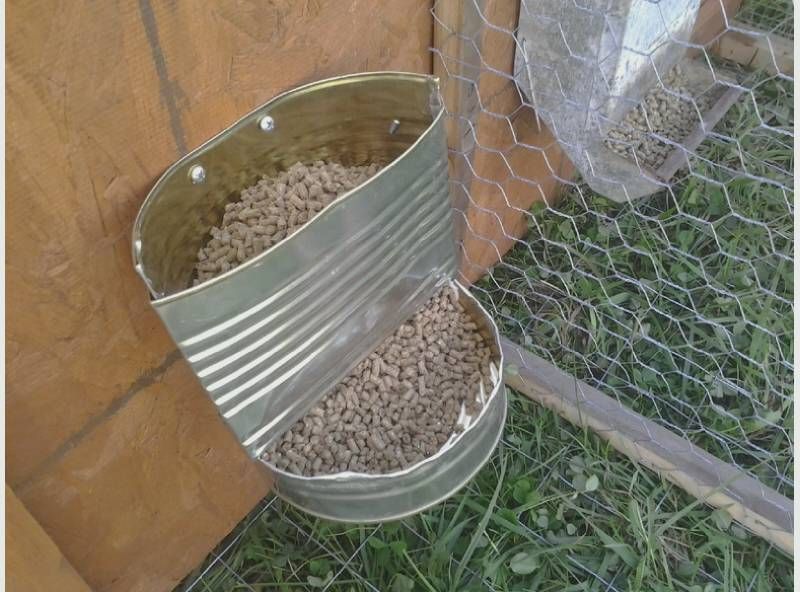
Because we keep the kits in with the does and encourage the kits to start eating grass and pellets as early as possible, we need large capacity feeders.  For a small rabbitry with half a dozen does, it's not such a financial burden to run out and purchase six to ten feeders for $12 each.  We're trying to increase rabbit production to a much larger scale than where we are now so we have to look at every expense and determine the best ways to spend our dollars.  If we can recycle a product and use some sweat equity to save money, we'll gladly do it.  I'd rather not spend a few hundred dollars on feeders!

A local caterer who is certified Virginia Green and does a lot of recycling gave us a couple empty, tin coffee cans.  Greg cut out the front, bent the rough edges, then screwed the panel to the sides.  Using a drill press, he poked holes throughout the bottom of the feeder, then secured it to the hutch wall with screws.

Now I'm on a mission to collect large tin cans to be repurposed into rabbit feeders.  Thanks, Panache Catering, for the empty coffee tins!


September 13, 2012

They multiplied like rabbits!

We added twelve new female rabbits to our herd yesterday.  These are white and broken red New Zealands, a standardly used meat breed.  I handled all of them before bringing them home and all but one are very, very docile.  The one oddball is pretty skittish and I'm hoping she will calm down once she's been handled a lot and is used to her new environment.


In addition to the rabbits we purchased, we have our first 2nd generation of kits!  Rosebud gave us a gorgeous daughter named Silverado. Silverado just kindled her first litter two days ago.  So far, she's proving to be an excellent mother, a character trait we value immensely and will continue to breed into our herd.  Silverado is an American Chinchilla x New Zealand mix.  She was bred to one of our young Silver Fox bucks.

Nine good-sized kits. No still borns and no runts.
Breeding stock is important. But it's also important to improve upon your stock. Breed in the traits you value and breed out (cull) the traits you don't like.  Good mothering is one of our most valued traits. For mothering skills, we look for does who nurse their kits twice a day, keep them clean, pull enough fur and let us handle the kits.  This is what prompted us to keep at least one doe from every litter Rosebud produces. She is an excellent mother.  We have two more does from Rosebud's second litter and we have high hopes for them to do as well as Silverado has done.