Showing posts with label fowl. Show all posts

September 2, 2013

Poultry processing

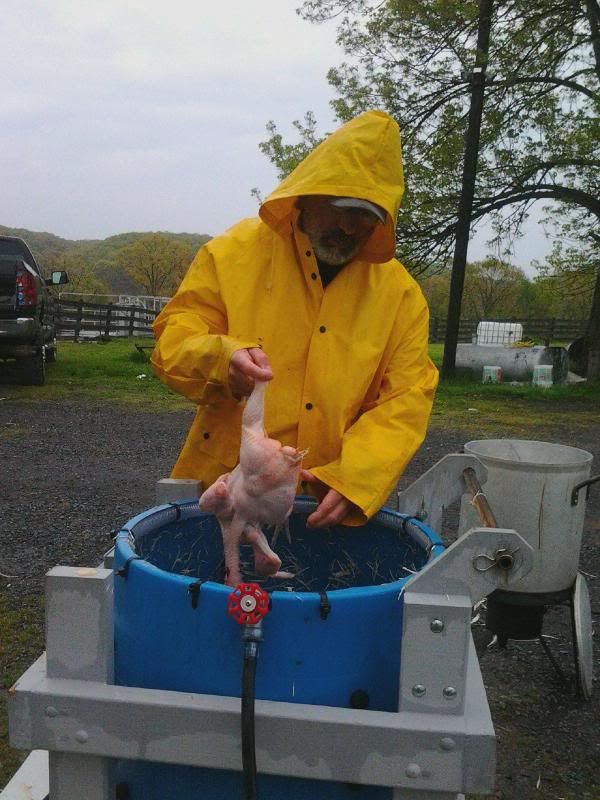
We've processed a lot of chickens this year. No where near our USDA exemption limit of 1,000 birds, but definitely more than we've processed in the past.  Greg has a system down of how he handles the birds, how he scalds and plucks them and then how we clean the birds.

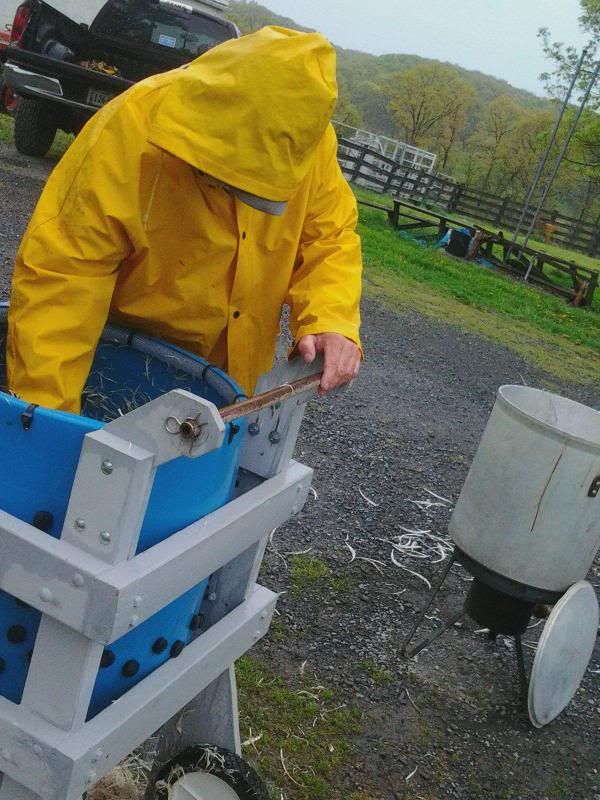
Over and over, he has utilized his home-made Whizbang plucker.  He purchased the plans and built it himself. 


We've processed turkeys, Cornish hens and broiler chickens this season. Greg can pluck all three types of fowl in the plucker but the motor is a bit too small for the turkeys. They require a bit of old fashioned, hand plucking.  We haven't tried ducks in the plucker yet.  Ducks are notoriously difficult to pluck.  If we had a duck, we don't plan on raising or selling ducks anytime in the near future.

July 6, 2013

Breakout Turkeys

Every morning for the past four days, the first thing one of us has said is, "The turkeys are out." They have figured out that they can fly over the electric netting and escape.  They've had great adventures wandering along the driveway, checking out the barn and milling around near the chicken coop.  This morning, they introduced themselves to our three laying hens.  The hens, equally curious about the turkeys, did not seem to be impressed.

Peekaboo

Catching some morning shade

Normally, they go back pretty easily and follow me to their area

Welcome back, turkeys

Reunited


The pile of feathers tells us someone didn't clear the fence on the first try!

Escaping is hard, thirsty work

We planned on butchering these turkeys in a couple weeks. If we can't keep them in the protected area, we might have to move up the butchering date.  This morning was the first time they didn't automatically follow us back to their area and we had to herd them back. 

Herding turkeys at 7am. Never saw that coming!

Tommy, our livestock guardian cat, sat and watched


April 30, 2013

Rainy days and Mondays

Chicken processing started on Sunday and continued into Monday.  Sunday was cold, wet and raw. Monday was no better. At times, it poured down the rain.


Chickens are dunked in the scalder to make plucking easier


Into the Whizbang Plucker Greg made


99% plucked chicken emerges

January 30, 2013

Little Chicken Nuggets

It's still January, but we're already thinking about ordering day old chicks and brooding them. Because we raise our chickens on pasture, we can't start ordering our day old chicks until we're pretty sure the worst of the cold days are behind us.  Our goal is to move chicks out of the brooder house at two weeks old but if it's too cold or rainy, they will die. Timing is everything.

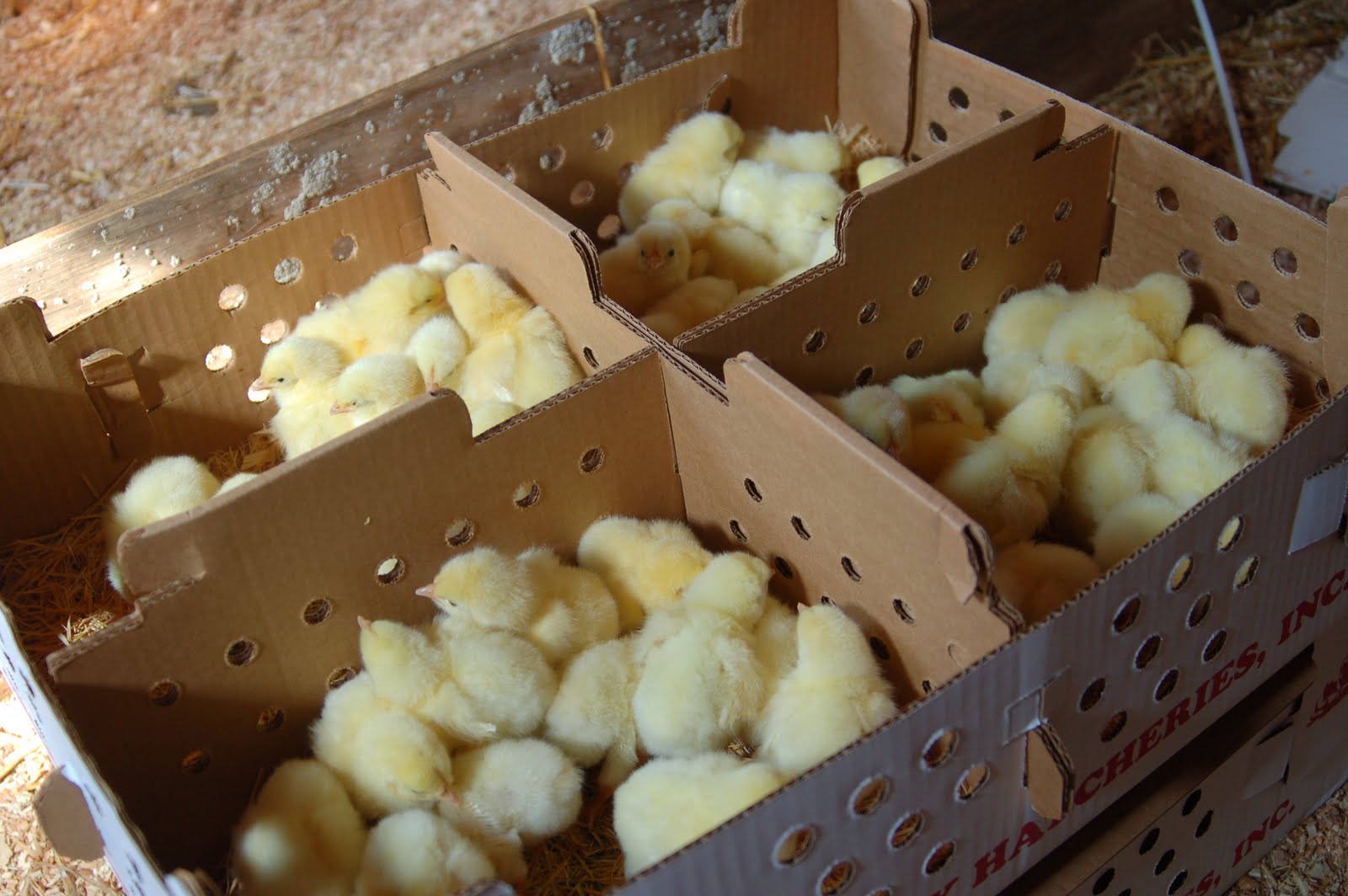
Newly hatched chicks arrive in the mail. The people at the post office think it's neat.
This year, we'll be raising Golden Comets to sell as laying pullets. We raised them last year and they did very well. Golden Comets mature a bit earlier than most layers and can start laying eggs as early as 14 weeks.  Most pullets start laying when they're around 20 weeks old.

We'll also be raising Cornish hens and broiler chickens.  Lots and lots of poultry will be going through the farm this spring and summer.  They are so cute and fluffy when they arrive.

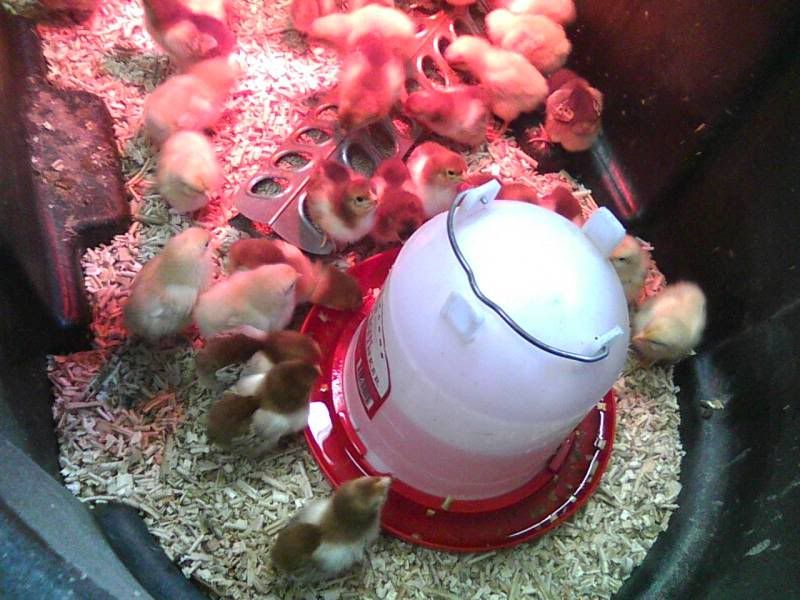
Fluffy little chicken nuggets

December 31, 2012

Snow thanks

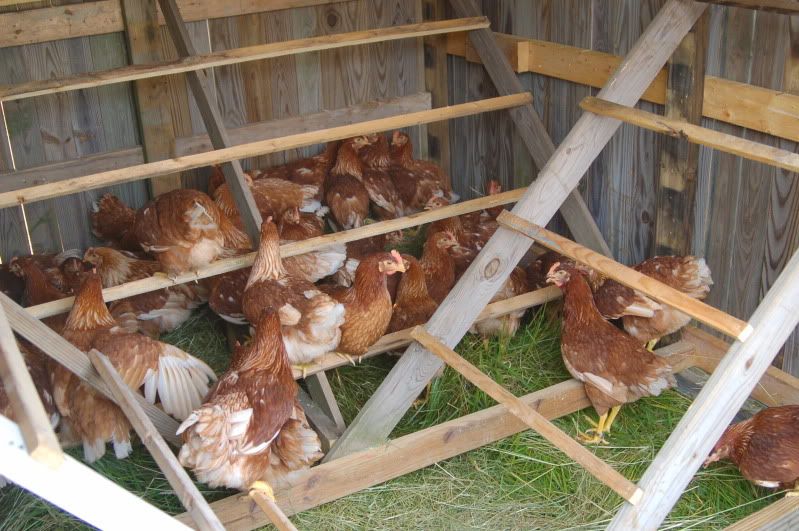
Due to some hungry foxes, we locked our free range chickens in the coop for about a week or so.  During that time, it snowed.  I opened the coop door to let the chickens out.  They were not interested. At all.  They hung out at the door, clucked, coo'd and made a lot of noise but not a single one of them ventured out into the snow.


December 20, 2012

Hello, Mr. Fox

Anytime you have livestock, predators will appear.  Cattle and pigs are not immune although we've not had any predation problems with those animals.  Our biggest issue has been loss of poultry and the fear of losing our rabbits.

We have a fox problem. The various trail cameras pick up foxes from time to time but the biggest indicator that a fox is nearby is the pile of feathers we find in a pasture.  This past week was been the second worst fox attack we've experienced. 

In the summer of 2011, we purchased over 40 laying hens.  In less than six weeks, we lost all but about a dozen of them.  It was devastating and heartbreaking. Fox got past the electric fencing and had a grand time.  It was a huge financial loss.  We had plans to grow our egg sales and use that as a way to attract customers to our other products.  In the end, we locked the remaining pullets in the coop with our first flock, let them get used to their new roosting location, then turned them loose in the yard.

We never expanded the flock again after that.  Eggs weren't selling and weren't profitable for us; there was no point to add more laying hens to the farm and increase egg production.  As time has passed, we've lost a chicken here and there. We had hens go broody and hatch chicks and we've incubated a few eggs as well.  Our modest little flock grew slightly.

Last week, we noticed that some of the chickens were missing.  Then we realized a few more were missing and we started adding it up. We had two beautiful young cockerels we hatched out earlier in the year. Two young pullets were also missing - one of which had just laid her first egg.  Rockstar, a large cantankerous Buff Orpington rooster, was also nowhere to be found.  And it seemed that our flock of hens was a bit smaller as well.  While moving cattle from one pasture to another, I came across piles of feathers. Yep. Fox attack. There weren't enough feathers to account for all the missing chickens but I could identify some of them by the feather piles.  As I herded the cattle past the pond, I came across two piles of duck feathers. This fox was bold and hungry.

Now the flock is locked in the coop again for their safety until this fox family moves on.  We heard them hunting one night.  The yip-howl they used to communicate as they hunted was eerie and somewhat scary.  I was very glad the chickens were safe in the coop that night.  So far, the rabbits have not had a problem with fox attack although I did find fox scat by one of the rabbit pens.

Predation is part of farming. You expect losses due to illness or complications during/after birth.  But when you lose animals to a  wild predator, it's almost an insult and always seems to hit you like a kick in the pants.  Being smart about preventative measures is your best defense. One day, I'd like to have a livestock guardian dog, especially now that the rabbitry is expanding.

Here's hoping this fox's days are numbered.

March 22, 2012

Moving Day

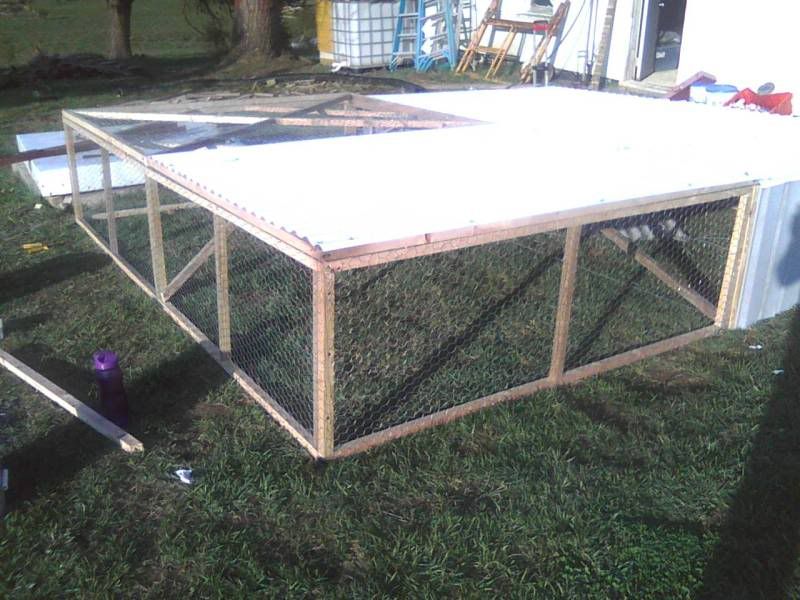
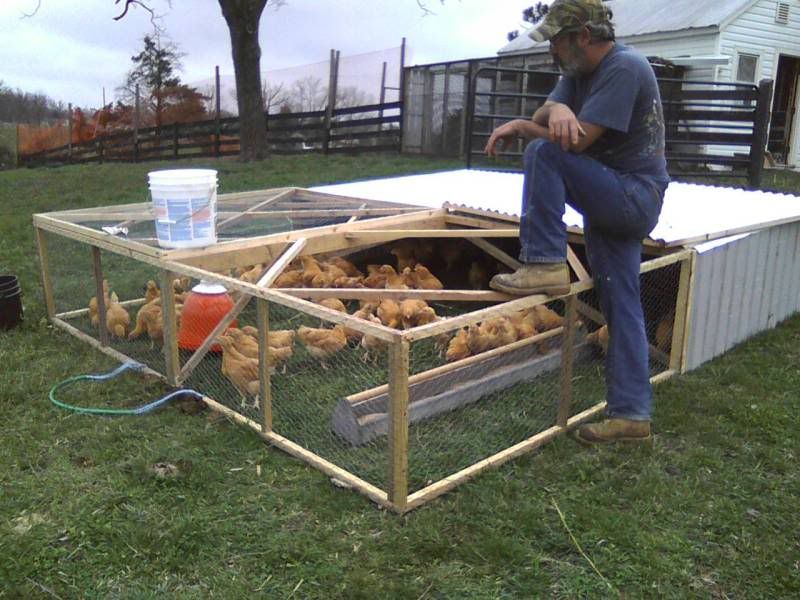
All the chicks are now in pasture pens enjoying grass, bugs, trace minerals in the soil and lots of sunshine.  Greg finished construction on the new pen - and subsequently learned that he needs to build two more - and we were able to get all the chicks on pasture.  Now that the brooder is empty, we'll be refilling it with Golden Comet pullets scheduled to arrive on Monday.

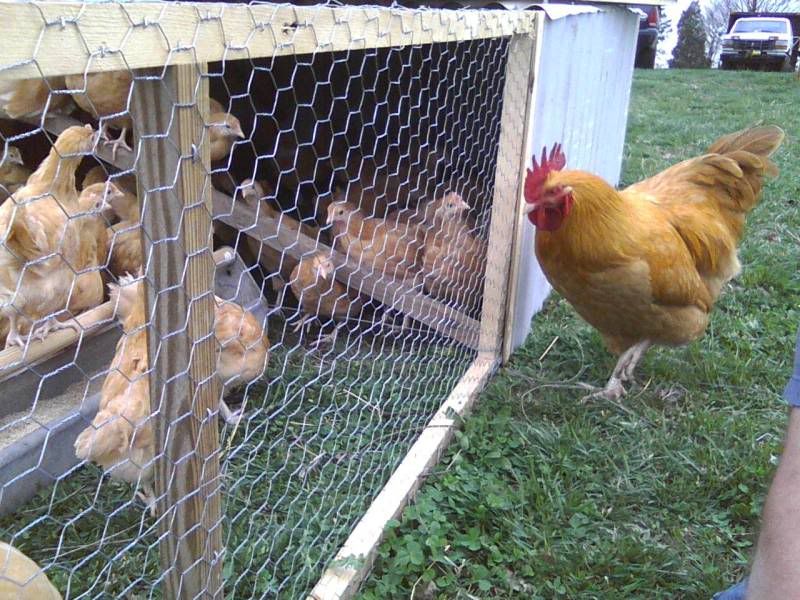
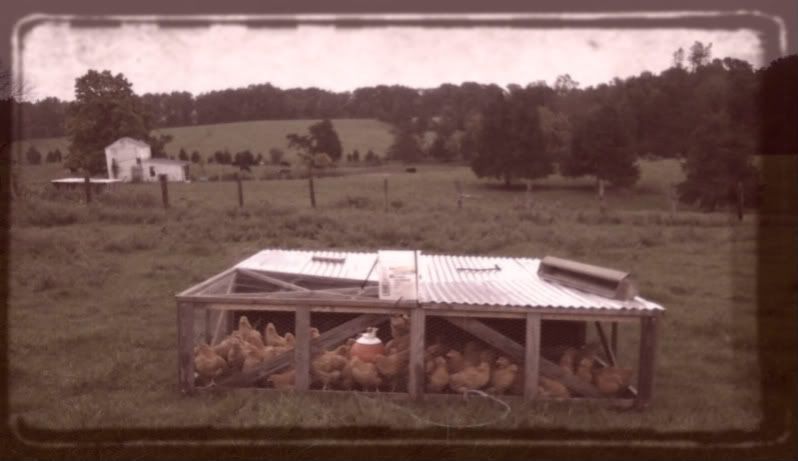
Finished pasture pen. Sides and roof made from recycled vinyl house siding


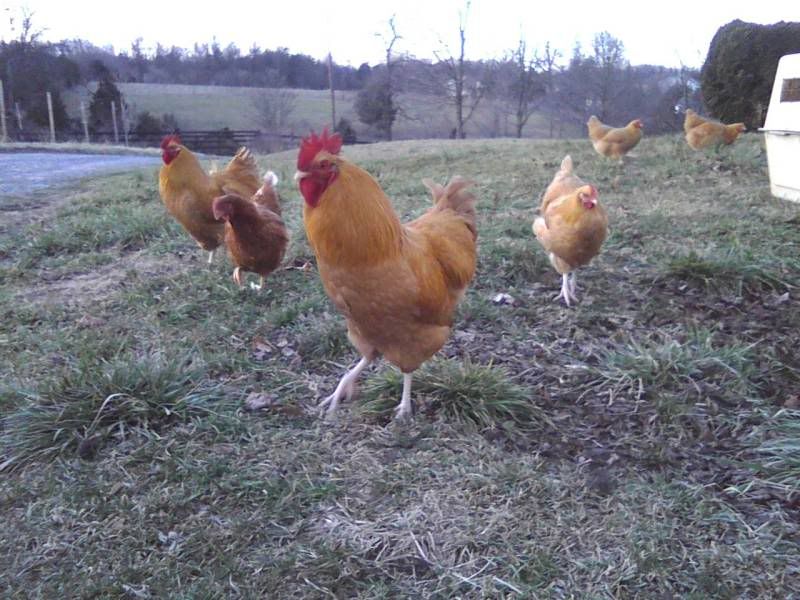
Free range Buff Orpington rooster from our laying flock
checking out the Buff Orpingtons in the pasture pen.

We now have two pasture pens filled with chicks.  However, one chick with a lame leg is in the barn in a small cage to limit his movement while he heals.  Once he's better, I need to decide whether to return him to the pasture pen or not.  Introducing a single "new" chicken into a large, established flock can prove to be detrimental to the lone chicken. He probably will not be accepted by the flock and will be pecked to death, bullied and not allowed access to food.  And if his leg never heals, he definitely won't be accepted by the other chickens. For now, I'll keep an eye on his healing and make a decision later.

February 26, 2012

Use everything

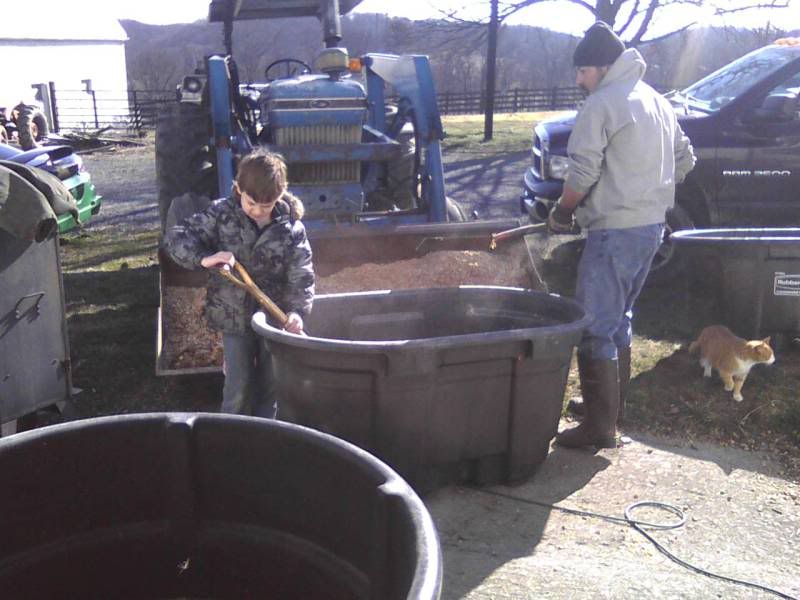
The chicks are no longer in the troughs in the garage.  We were left with four troughs filled with chicken litter. For gardens, this is great fertilizer.  Today was cleaning day.

From the troughs to the tractor bucket
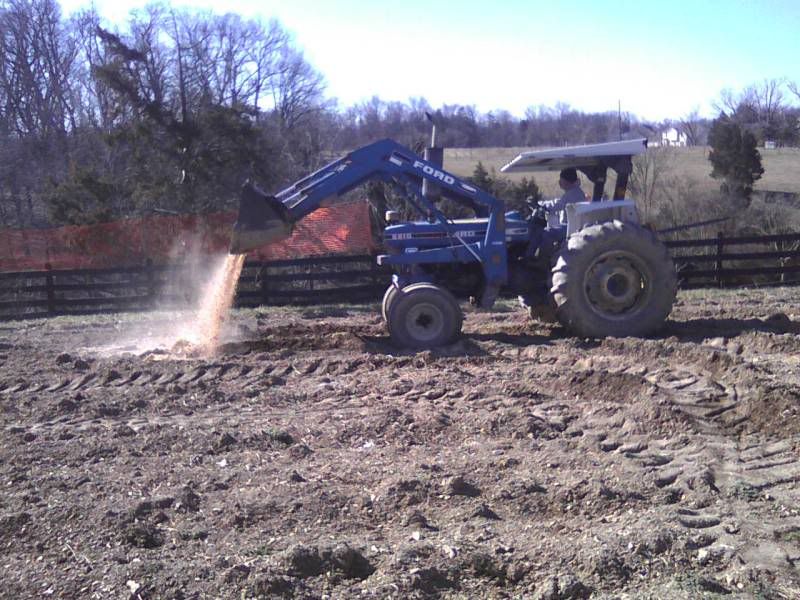
And straight to the garden

This is one of the things that I love most about our farming methods -- we use what the animals give us and put it all back into the cycle of the farm.

February 23, 2012

Ingenuity

Ingenuity- word of the day.

Our 200 cockerel chicks quickly outgrew the makeshift trough brooders in the garage but it was still a bit too cold and windy to move them back out to the barn brooding stall.  After all the work getting through that first cold week, we really didn't want to lose any more chicks because we weren't diligent in protecting them from the cold.

We couldn't turn them loose in the barn stall yet because it was still too cold and windy.  The brooder lights alone weren't enough to keep the chicks warm.  We need to insulate them from drafts.  I had previously put up styrofoam insulation panels as draft guards and to provide some heat retention. Great idea until the chicks decided it would be fun to peck at them until they got to the styrofoam, pulled off pieces and then chased each other trying to grab the styrofoam out of each other's beaks.  We considered putting in the wood brooder dividers we used last year but the chicks started jumping pretty high and we were afraid they'd jump out, get cold and be unable to get back into the brooder and the lights.

I was at a loss for what to do but it was clear they couldn't stay in the garage any longer. We already caught a few testing their ability to jump out of the troughs.

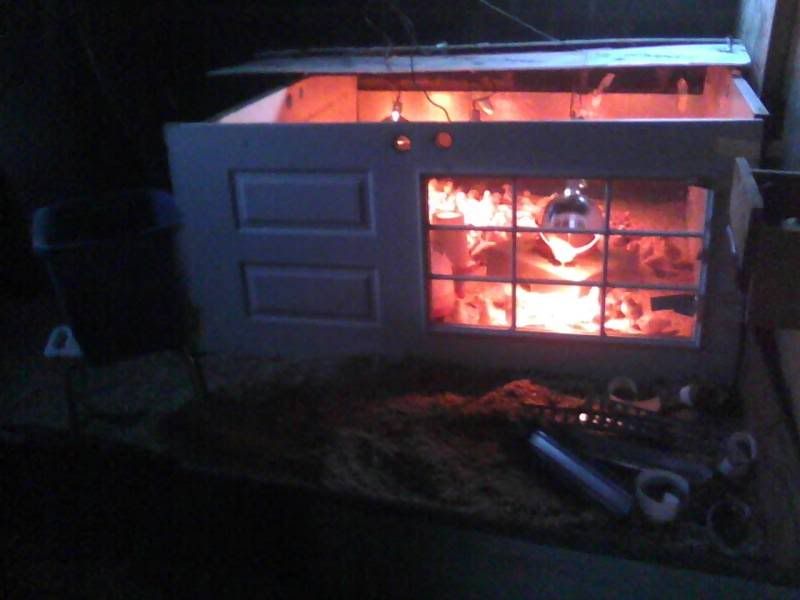
I got to the farm on Tuesday and started hunting around for Greg.  I found him in the brooder stall.  That man is brilliant.  I'll admit I let out a big laugh when I saw his solution, but honestly, it's ingenious!


The back wall is cement with a styrofoam panel, then a piece of aluminum siding nailed to it to keep the chicks from pecking at the insultion.  The other three walls are old doors from a job site that were going to be thrown out.  The roof area is made from the original insulation walls.  I don't know about you, but I LOVE the window door in front!  As soon as we walk up, we can see how the chicks are doing.  Once it warms up enough and the chicks are another week older, we'll take the doors down and they'll have full run of the stall.

It made me laugh but it really is pretty awesome brooder. And it's just redneck enough.

February 12, 2012

Winter brooding

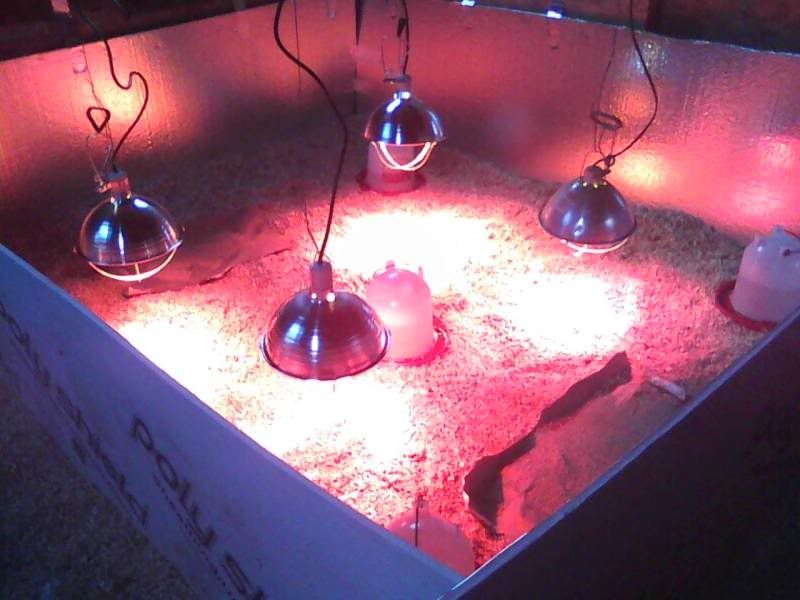
We started out with a 12x12 stall.  Added two bags of pine shavings and a dividing board. 
The door was covered with a tarp to help keep out the wind and cold.

Five heat lamps were added (and tested).

Sheets of reflective insulation were added and decreased the brooder size down to 8x6'. 
The insulation was to help keep the chicks closer together and warmer.

Two hundred chicks arrived from Mt. Healthy Hatchery. 


The chicks did well for the first night but they were bunching up
together too much, a sure sign that they were cold.  Chilled chicks
is a bad thing and a sure way to kill them.  The tempers were about
to drop dramatically and the wind chill was predicted to be -5.
We had to find a solution to get the chicks warm enough.

Friday night as the snow started to fall, we pulled three 100 gallon water troughs
into the garage, covered the bottoms with pine shavings and transported
the chicks from the barn to the garage.  This was absolutely the right choice.
The bunching stopped and the chicks were able to rest while remaining warm.


Chicks need as little stress as possible. Often when stressed, they develop mud butts. Basically, their poop sticks to their butts and can dry, covering their vent, making it impossible for them to poop. This can kill the chicks.  Between the cold, not resting well the first night and moving to a new brooder situation in the garage, our chicks started showing signs of stress.  We spent several hours on Saturday cleaning chick butts. Glamorous, right?  But very necessary.

That's the thing about animal husbandry. We are responsible for the welfare of these little fluff balls is 100% up to us. Normally, the momma hen would peck the chicks clean. So now we're the momma hen. We spend lots of time just watching the chicks, making sure they are happy, clean, healthy and behaving the way they are supposed to behave.  That means cleaning manure. A lot. In many forms. It means that the health and well-being of the animals in our care is top priority.  We have to be alert for changes in their behavior, no matter how small, and we have to figure out what they are telling us so we can make appropriate changes.

We lost one chick Thursday night. I spent most of Thursday trying to help him recover but he was too weak and didn't survive the night.  Losing one out of two hundred is not bad at all.  Most people expect up to 10% mortality in the first week.

The rest of the chicks look great - they're active, hungry, thirsty, playful and growing.

Three Days Old:
Buff Orpingtons - 1 3/4 oz ea
Red Sex Links - 1 5/8 oz ea

February 8, 2012

October 2, 2011

Escapees

What a delicious view
These are our Buff Orpingtons out in the pasture pen.  They love the fresh grass every day and are growing really well.  They are almost thirteen weeks old now.  They'll continue to grow larger for a few more weeks.  We'll be culling the cockerels and will most likely keep the pullets for our layer flock.  We have quite a few older hens who will be culled this fall once they stop laying. They'll be replaced by these pullets.

Because these birds are much lighter than the Cornish Cross were, they are energetic and are eager to roost and jump out of the pen.  Every time I try to feed them by myself, at least one escapes.  Mitchell, my seven year old son, was supposed to be helping me feed them today but was distracted by one of the barn cats. In the mean time, these chickens kept trying to jump out of the pen while I was trying to hold the roof up and grab the feeder out of the pen.  I was able to keep all but one of them in the pen.

Then, the chase began.  I let her walk around the pen. She stayed pretty close to it because she wanted the feed I had just put inside but she couldn't figure out how to get in.   I was holding the roof open with one hand so she could jump in, all the while trying to make sure others didn't jump out and try to catch the escapee with my one free hand.  My son just watched.

I finally got him to hold the roof up while I chased the chicken through the pasture. She finally made her way back in and went straight to the feeder.

I will admit that this is not the first time this has happened to me.

September 5, 2011

First run; almost done

After munching on grass and bugs all
day, it's time for some extra dinner.
Only July 28th, we plunged head-first into a new adventure. We decided to try something neither of us had ever done; neither of us had any experience.  We had an idea. We had a goal. We had a vision.  And as mentioned in previous posts, we had a little bit of crazy.

Our first batch of Cornish Cross broiler chickens arrived on July 28 as cute, fluffy puffs that chirped, ate and pooped endlessly.  They started out weighing ounces, now they weigh several pounds each.  The one constant has been their appetite -- these birds can eat! We are winding down on their life cycle and it's hard to image morning and evening chores without them as part of the routine.  These are not pet chickens, but they have been part of the farm and we will definitely feel their absence.  Our goal were to get this batch from peep to processing as healthy chickens, raised on grass and sunshine without the use of growth hormones or antibiotics. 

On Friday, they will be processed and available for dinner tables.

Friday is quickly approaching and we're trying to prepare for the big event.  The only poultry processor even remotely near us is several hours away.  We aren't set up to process the birds on our own, nor are we prepared to deal with the governmental red-tape that accompanies on-farm processing when you will sell the broilers.  Outsourcing the processing definitely cuts into the profits, but it's the right choice for us at this time.  If we find that this venture can support us enough that we can take the time off to butcher on premises, if we can afford the equipment and if we're able to make it legal and workable, we will definitely consider butchering on-site. 

As far as affordability goes, we're not cutting corners and buying feed with artificial junk in it.  We've stuck to the all natural feed.  But we are frugal wherever possible. I love that we have been able to recycle so many materials for the brooder house, the pasture pen and now for the transport crates.

We can fit 8 - 10 chickens in each crate and we'll need about 10 crates for each run of 100 chickens.   Purchasing plastic, yet durable, crates would cost us almost $800.  That is definitely not in our budget! We can't throw the chickens in the back of the truck and call it done, so we had to find a solution.  Greg found instructions online for building wood crates.  He used discarded wood from other projects and was able to build four crates today.  Greg did most of the work, but I was able to let out some frustration with the hammer and staple gun.  Most of the cuts are done for the remaining crates and we'll work on that all day tomorrow.

Tuesday afternoon, we'll receive a visit from the state to test the birds for avian flu.  The test results must be received by the processor before we arrive Friday morning.  Speaking of arriving... we need to be there at 5:20 am.  All the kids will be coming with us. It's going to be a very interesting morning!

Even though we're in the final week of the chickens' life cycle, there's still much work to be done.  Now we need to find homes for all these yummy birds!


August 20, 2011

Growing

1 day old

3 1/2 weeks old
Those Cornish Cross are some ugly birds.

Peep Anarchy

The chicks are now 4 weeks old and they have outgrown the brooder house.  Every time we go in there, chicks are everywhere.  Layers are in the meat side and meat chicks are mixed in with the layers.  It's becoming hard to keep the meat chicks from running out of food and water because they are voracious eaters!  We bring them fresh grass every day.  This helps offset (albeit minimally) the amount of feed they're eating but it also gets them used to a grass diet which is what they'll be eating once they're in the pasture.

Every morning, the pen will be moved 12' to new grass
Greg has been working hard to build the 12' x 10' pasture pen. He's almost done and we should have the broiler chicks in the field on Monday.  The concept of the pen is pretty simplistic: give the birds fresh air, sunshine and fresh pasture every day.  They will receive as much sun and shade as they like, they'll be protected from predators and they'll eat fresh grass daily. Three quarters of the pen will have a metal roof and the remaining quarter will have a chicken wire roof.  We've used as much recycled materials as possible to cut down on costs and because, well, why not!

I weigh the chicks each Sunday to track their progress. I knew that the broilers would grow much faster than the layers, but wow are they growing fast!!


W E I G H T


Broilers Layers
7-Aug   8 5/8 oz 4 1/2 oz
14-Aug   1 lb 6 1/4oz 6 5/8oz

I'm excited to see how much weight they've all gained in the past week. Any guesses on what they'll weigh?

August 8, 2011

Special Delivery

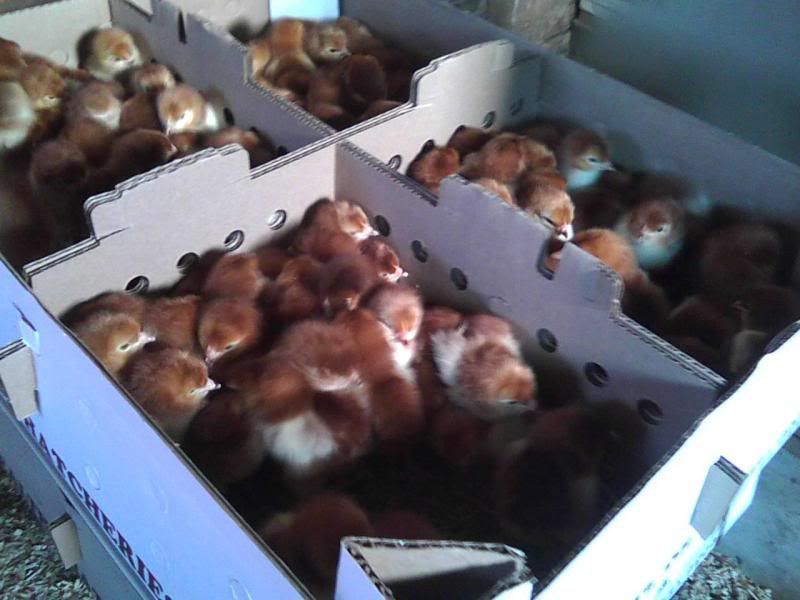
This is how they came to us through the USPS

50 Buff Orpingtons egg layers  |  100 Cornish Cross broilers

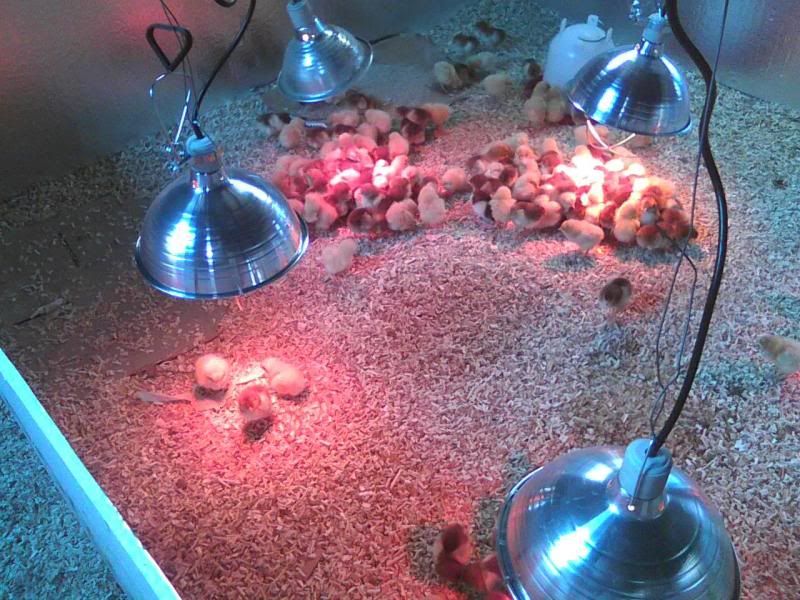
Toasty warm under the brooder lamp

First feeding
A week and a half ago, I picked up a very noisy package from the post office: 150 day old baby chicks.

Greg converted one of the barn stalls into a brooder where the chicks will live until they are four weeks old.  After that, the broiler chicks will go into a special 12'x10' pen in the cow pasture.  Every day, this pen will be moved 12 feet to fresh grass. Our broilers will feast on green grass, bugs and other yumminess in the pasture.  They'll receive supplemental, all natural feed to help them grow.  In about 45 days after hatching, we'll transport the chickens to a USDA certified processor who will butcher the chickens for us.  Mid-September, we'll be selling all natural, pasture fed broiler chickens.

Between now and then, there's a lot that happens.  Two to three times a day, we go out and feed the chicks. They eat a lot. I mean a LOT!  They drink lots of water too so we're constantly refilling their waterers.  We pull fresh grass every day so even though they aren't outside, they still get fresh grass and, wow, do they love it!  I spend time simply sitting on a bench in the stall watching them to make sure they are all doing well and  none of them are having problems.  These are some very happy, active, curious chicks.  I love watching them chase each other when one has a special leaf in its mouth. They eat, they drink, they play, they sleep.

Now that they're a week and a half old, they are losing their fluffy baby-chick down and their real feathers are coming in. It's an odd-looking stage for the chicks.  They're growing and gaining weight like champs.  The Cornish Cross are now almost 9 ounces.  The Buff Orpingtons are about 4 1/2 ounces.  This weight difference is normal because the Cornish Cross are fast growing, meat birds.  They are bred to grow quickly.  The Orpingtons are an egg laying breed. They don't need to gain weight and since they're a laying breed we'll butcher the cockerels at around 4 or 5 months of age.  We'll most likely keep the hens to augment our layer flock.

Enjoying some fresh grass


Those are some hungry chicks!

July 12, 2011

Dwindling numbers

About a month ago, we brought 41 new hens to the farm. It was crazy. We felt crazy.  We were told we're crazy. There was a lot of clucking going on and it wasn't all in the field. But that's okay because we welcome opinions and input and ideas. We don't have all the answers, just the determination to try something a bit left of center.  I'll freely admit that the majority of the crazy around here comes from me, but Greg can get crazy too.

So, back to the chicken crazy part.

We brought home 41 hens.  We already had a dozen Rhode Island Reds (including two roosters) as well as about 7 or 8 Ameracaunas (which included 3 - yes, 3 - roosters).  The idea was to take the coop raised RIRs, the "I own this farm and will go wherever I want" Ameracaunas and all the new hens and throw them all into the pasture with a new roosting house and a new nesting house. Everyone would free range, a new pecking order would be established, all our eggs would be produced from hens happily scavenging for bugs and grass and seeds and weeds the way happy chickens do.  It would be a Norman Rockwell, picture perfect, slice of apple pie, American farming dream come true.

Ha!

They didn't know how to roost
That first night was, well, horrible.  The Ameracaunas all went through the electric fence and made their way back to their coop either during the night or during the next day.  The new hens had no idea what roosting was so they all clucked around and slept on the grass in the roosting house and wouldn't come out until I physically picked them up and shoo'd them out the next afternoon.  By that time, they hadn't had food or water for 24 hours.  And the RIRs. Oh the poor RIRs.  Let's give them their very own paragraph.


Greg's Rhode Island Reds
Greg's Rhode Island Reds have been in the coop for most of their lives. For a while, they free ranged.  Until a kindly neighbor in the subdivision that borders the farm started feeding them seeds and one day forgot that they had fed the chickens and let their dog out who killed on of the birds and Animal Control was called.  Since then, Greg has kept the RIRs in the coop.  They have been in there for a year, happily eating and clucking and producing eggs.  They have a very strong sense of where their coop is.  So when we tossed them into an open air roosting house, we had no way to keep them in there to help them redefine their sense of home. Consequently, they tried to get home that night.  They wanted the safety of their coop and the security of roosting in the same place they had roosted for the past year.  We didn't think about that. If we had, we would have hopefully been smart enough to leave the coop door open so they could get back in.  We didn't.  One rooster was eaten. The other rooster was caught in the deer fencing for the garden right next to the coop.  He was severely traumatized although not very injured. It took several weeks before he would crow again.  Some eventually found their way back to the coop, although one hen decided to stay in the pasture with the new hens. Sadly, about half the RIR hens were eaten. Greg now has one rooster who, when crowing, sounds like he has a frog in his throat or is a 13 year old boy going through puberty. It's pitiful.  And a little funny.  But mostly pitiful.

We learned quite a few lessons that night and the next day. 

About two weeks later, a fox or coyote attacked the flock and killed about 20 chickens.  We had been doing a lot of other things on the farm and didn't realize what had happened until late afternoon.  I went out to check on them and realized the flock looked very sparse. I thought maybe a bunch of the hens were hanging out in the nesting house since it was so hot outside and the nesting house is dark and cool. But as I walked through the pasture, I kept coming across piles of feathers. Each time I saw a pile of feathers, my stomach tightened a little bit more. When I came across the first dead chicken, my fears were confirmed.  The more I walked the pasture, the more dead chickens I found.  We did a count and came up with 21 chickens and 1 rooster.  Half the flock was gone.

Five days later, we were hit again.  Ten more hens were dead or missing.  We're down to 11 hens and my white Ameracauna rooster who claimed the flock.

The hens have stopped using the roosting house and are roosting on the nesting boxes. It's a mess.  Greg is going to make shutters so we can close the chickens up at night for their safety and to keep them from roosting in the nesting house.  We plan to replace the electric wire with electric poultry netting as soon as we can afford it.

We're going to try to buy more layers as we can and continue to produce eggs.  We've learned some tough lessons and made some costly mistakes.

And we're still crazy enough to keep at it until we can make it work.

July 11, 2011

Learning by doing

A month ago, I put eggs in the incubator.  I thought I was following the instructions and eagerly awaited 4th of July weekend when they were scheduled to hatch.

About 2 or 3 days before the hatching was scheduled to occur, I thought I was losing my mind because I kept hearing chirping in the kitchen but couldn't figure out where it was coming from.  Then I realized that it was coming from an egg!

Greg didn't believe me. The chirping never happened while he was in the kitchen with me. Until it did. And we both froze and stared at each other with wide eyes. "I TOLD YOU!!! I TOLD YOU!!!" He pretended that I was crazy and that he hadn't heard anything but he was excited too.

Pipping!

I know someone will ask...
That's a folded up cereal box at the bottom of the pic.
I put it in there to separate the RIR
and Ameracauna chicks when they hatched.

Then, the chirpy egg started to hatch, also known as pipping.  The chirps grew louder and more incessant. Through the crack, we could see the chick moving around in the egg.  It was so exciting!

We got the brooder ready and then waited.

A few things bothered me: there was only one voice chirping when there should have been close to 40 and the chick was no longer making progress with the pipping.

Everything I read was very consistent: Do NOT open the incubator unless the chick is in danger of dieing. Do NOT help the chick unless it is seriously stuck.  So I left the chick alone even though my gut was telling me something was wrong. I wasn't seeing any movement through the crack in the shell and that had me concerned.

The chirping continued for a few more hours. Finally around bedtime, I decided it was time to help the chick, but it was too late and the chick was dead.

What I learned was that there wasn't enough humidity in the incubator so the shell had dried out, trapping the chick inside.

None of the other eggs hatched.

I did several things wrong from the very beginning.
  1. As Greg can attest, I am not a very patient person. I didn't wait long enough to stabilize the incubator temperature before putting the eggs in. 
  2. There were a few high and low temperature fluctuations throughout the incubation.
  3. I did not put the eggs point down in the egg turner.
  4. I did not add water to create humidity during the incubation period.
These are all big issues that caused the chicks to die during incubation.

Sometimes you have to learn by doing. I am sure I will not make these mistakes again.  Yes, I'll try to hatch out chicks again at some point.  I'll probably wait till fall so they will be at laying age just as spring starts and the rest of the hens start laying as well.

June 19, 2011

Roosting house on the left, feeding area in the center, nesting house on the right

The hens seem to have settled in nicely.  Yesterday they were all over the field foraging. Yay!  They have started using the nesting house but I'm suspicious that there might be some eggs in the pasture somewhere.  I'll keep looking.
They have created some dirt pits to roll around in so we added diatomaceous earth to the pits to help with any lice or mites, although they looked very clean when they arrived.

The white Ameracauna rooster has claimed the entire flock as his own and will not share with the other roosters.  He squawks at his girls and prances around with them all milling around him.  Until you've seen a rooster in hen-heaven, you really can't understand the meaning of "cock walk".

One of the hens got out of the electric fence.  She finally found her way back in - which is good and means that she knows where her home is.  But the fact that she got out and back in isn't so good.  We need to save our pennies for electric poultry netting.

June 15, 2011

Toasty warm


34 Rhode Island Red eggs
6 Ameracauna eggs
1 empty spot
99.5 degrees
21 days

All adds up to a bunch of fluffy chickies hatching sometime around July 4th weekend!