Showing posts with label broilers. Show all posts

April 30, 2013

Rainy days and Mondays

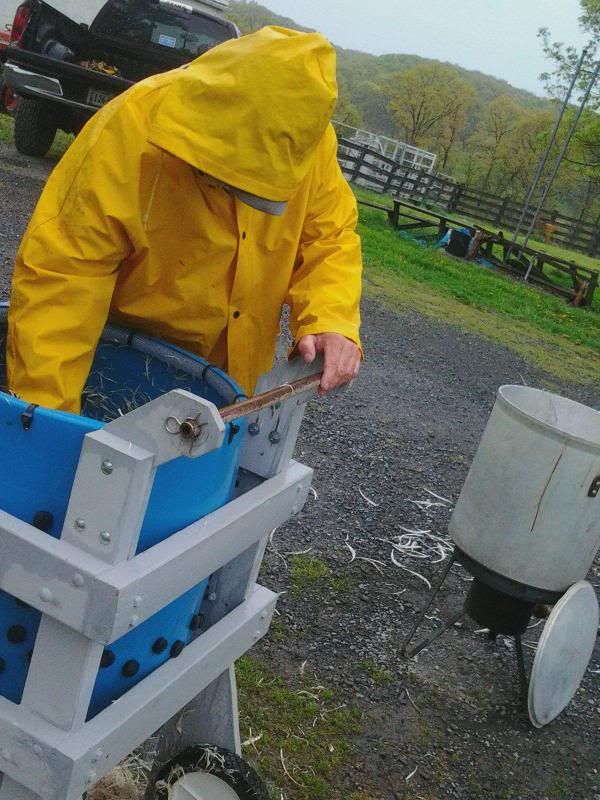
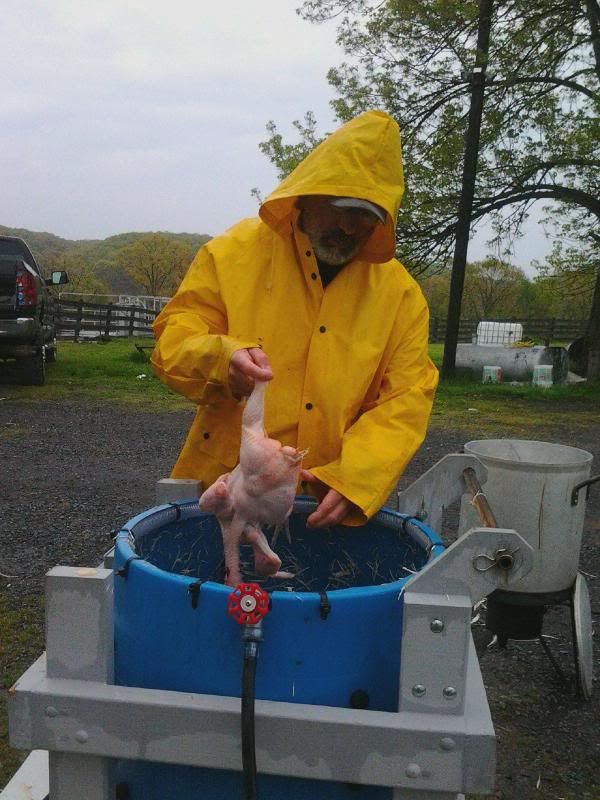
Chicken processing started on Sunday and continued into Monday.  Sunday was cold, wet and raw. Monday was no better. At times, it poured down the rain.


Chickens are dunked in the scalder to make plucking easier


Into the Whizbang Plucker Greg made


99% plucked chicken emerges

September 5, 2011

First run; almost done

After munching on grass and bugs all
day, it's time for some extra dinner.
Only July 28th, we plunged head-first into a new adventure. We decided to try something neither of us had ever done; neither of us had any experience.  We had an idea. We had a goal. We had a vision.  And as mentioned in previous posts, we had a little bit of crazy.

Our first batch of Cornish Cross broiler chickens arrived on July 28 as cute, fluffy puffs that chirped, ate and pooped endlessly.  They started out weighing ounces, now they weigh several pounds each.  The one constant has been their appetite -- these birds can eat! We are winding down on their life cycle and it's hard to image morning and evening chores without them as part of the routine.  These are not pet chickens, but they have been part of the farm and we will definitely feel their absence.  Our goal were to get this batch from peep to processing as healthy chickens, raised on grass and sunshine without the use of growth hormones or antibiotics. 

On Friday, they will be processed and available for dinner tables.

Friday is quickly approaching and we're trying to prepare for the big event.  The only poultry processor even remotely near us is several hours away.  We aren't set up to process the birds on our own, nor are we prepared to deal with the governmental red-tape that accompanies on-farm processing when you will sell the broilers.  Outsourcing the processing definitely cuts into the profits, but it's the right choice for us at this time.  If we find that this venture can support us enough that we can take the time off to butcher on premises, if we can afford the equipment and if we're able to make it legal and workable, we will definitely consider butchering on-site. 

As far as affordability goes, we're not cutting corners and buying feed with artificial junk in it.  We've stuck to the all natural feed.  But we are frugal wherever possible. I love that we have been able to recycle so many materials for the brooder house, the pasture pen and now for the transport crates.

We can fit 8 - 10 chickens in each crate and we'll need about 10 crates for each run of 100 chickens.   Purchasing plastic, yet durable, crates would cost us almost $800.  That is definitely not in our budget! We can't throw the chickens in the back of the truck and call it done, so we had to find a solution.  Greg found instructions online for building wood crates.  He used discarded wood from other projects and was able to build four crates today.  Greg did most of the work, but I was able to let out some frustration with the hammer and staple gun.  Most of the cuts are done for the remaining crates and we'll work on that all day tomorrow.

Tuesday afternoon, we'll receive a visit from the state to test the birds for avian flu.  The test results must be received by the processor before we arrive Friday morning.  Speaking of arriving... we need to be there at 5:20 am.  All the kids will be coming with us. It's going to be a very interesting morning!

Even though we're in the final week of the chickens' life cycle, there's still much work to be done.  Now we need to find homes for all these yummy birds!


August 23, 2011

Pastured chickens

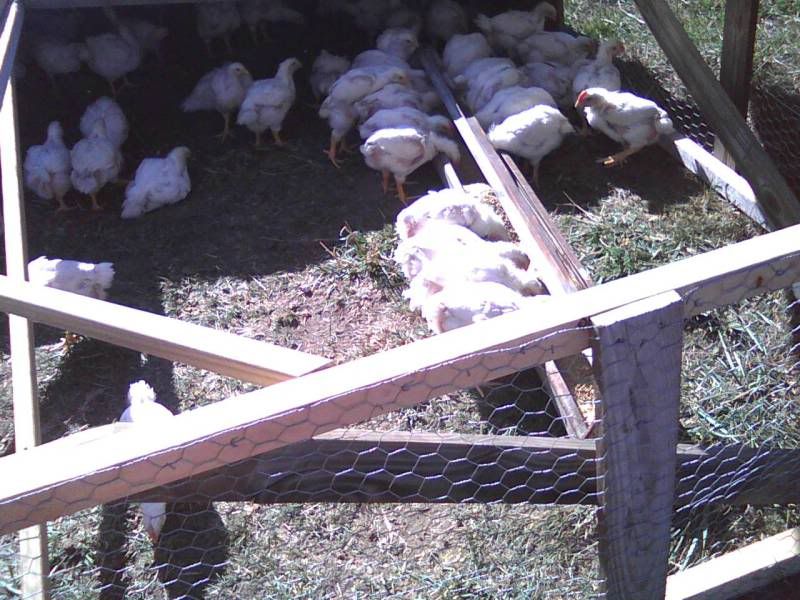
The Cornish Cross chicks are three and a half weeks old and are finally out in the pasture. They outgrew their part of the brooder stall about a week ago and were invading the Buff Orpington side daily.  It was really hard to keep their litter dry but wow is it composting well! How weird is it to be excited about composting chicken poop?

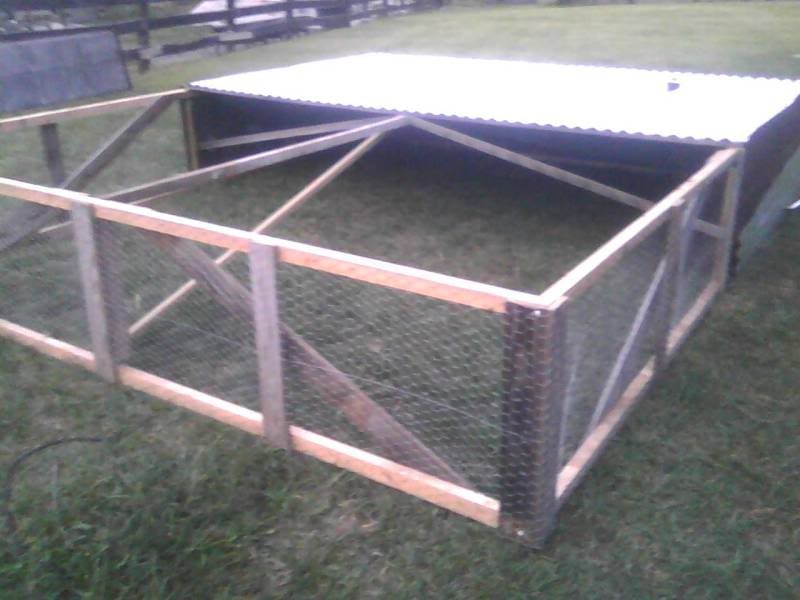
Greg built the pasture pen from scratch. I'm really impressed because he built it based on seeing pens at Polyface and looking at pictures in books.  I sure couldn't do it!  He did an awesome job on it. 

The pens are designed to give the chickens maximum protection from weather and predators while also allowing them to free range on grass and get sunshine and fresh air.  Not too shabby a life for a chicken! I could pull out my soap box and rant about factory chickens but it's not worth the effort.  I'm really proud that we are raising chickens in a humane, healthy and natural environment.  They aren't the most beautiful birds you'll see, but they will be so yummy!

Out to pasture.  This section normally has a solid roof over it. It's open here so I could feed them.

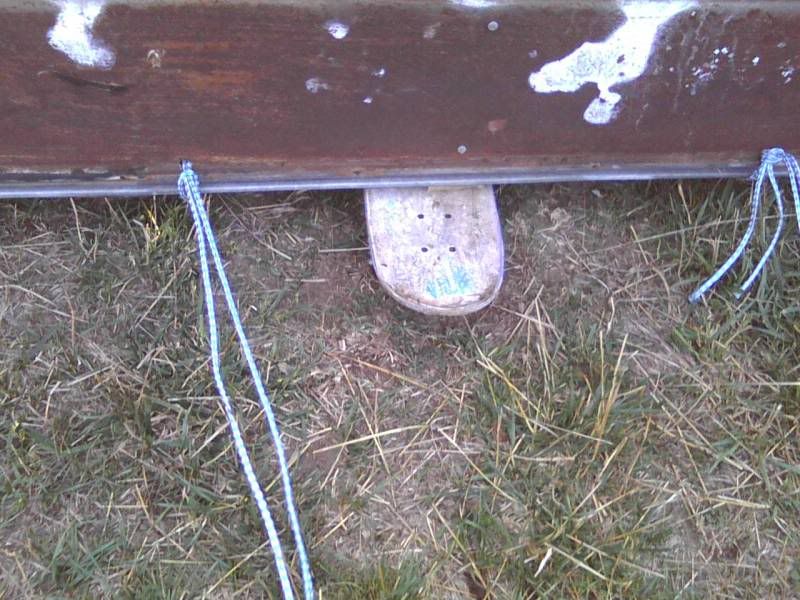
As for the construction of the pens, we went as redneck as possible.  Well, not really. Greg did recycle a lot which is pretty cool and helps keep costs down.  Old metal roofing was used on the sides, wood from a torn down privacy fence became support beams.  And Sammy's old skate board is temporarily being used to help transport the pen each morning when it's moved.  Eventually we'll have wheels or a dolly to help move it.  Greg sticks the skateboard under the center of the back, then goes around front and pulls the entire contraption forward twelve feet, very slowly.  As it moves forward, so do the chickens. 
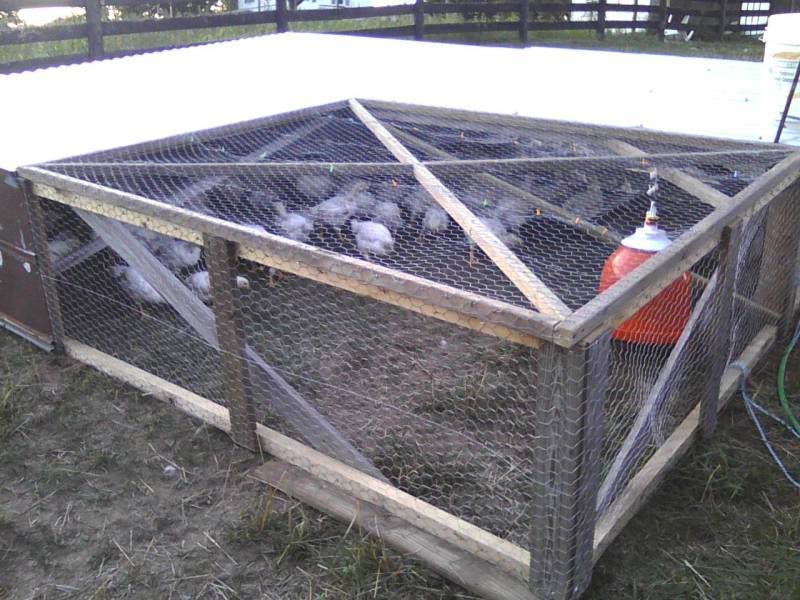
Three quarters of the roof is covered for protection from the weather (rain and sun) as well as protection from predators.  The waterer is in the sun which forces these lazy birds out into the sunshine for the sun's Vitamin D.  The chicken wire roof and the metal roof to the right of it are both removable and are not permanently attached.  We keep a five-gallon bucket up on top to collect rain water.  The bucket feeds down into the waterer in the pen.  We haul water to it as needed but hope that rain will give us a hand from time to time.
Transporting the chicks from the white barn out to the pasture.

August 20, 2011

Peep Anarchy

The chicks are now 4 weeks old and they have outgrown the brooder house.  Every time we go in there, chicks are everywhere.  Layers are in the meat side and meat chicks are mixed in with the layers.  It's becoming hard to keep the meat chicks from running out of food and water because they are voracious eaters!  We bring them fresh grass every day.  This helps offset (albeit minimally) the amount of feed they're eating but it also gets them used to a grass diet which is what they'll be eating once they're in the pasture.

Every morning, the pen will be moved 12' to new grass
Greg has been working hard to build the 12' x 10' pasture pen. He's almost done and we should have the broiler chicks in the field on Monday.  The concept of the pen is pretty simplistic: give the birds fresh air, sunshine and fresh pasture every day.  They will receive as much sun and shade as they like, they'll be protected from predators and they'll eat fresh grass daily. Three quarters of the pen will have a metal roof and the remaining quarter will have a chicken wire roof.  We've used as much recycled materials as possible to cut down on costs and because, well, why not!

I weigh the chicks each Sunday to track their progress. I knew that the broilers would grow much faster than the layers, but wow are they growing fast!!


W E I G H T


Broilers Layers
7-Aug   8 5/8 oz 4 1/2 oz
14-Aug   1 lb 6 1/4oz 6 5/8oz

I'm excited to see how much weight they've all gained in the past week. Any guesses on what they'll weigh?

August 8, 2011

Special Delivery

This is how they came to us through the USPS

50 Buff Orpingtons egg layers  |  100 Cornish Cross broilers

Toasty warm under the brooder lamp

First feeding
A week and a half ago, I picked up a very noisy package from the post office: 150 day old baby chicks.

Greg converted one of the barn stalls into a brooder where the chicks will live until they are four weeks old.  After that, the broiler chicks will go into a special 12'x10' pen in the cow pasture.  Every day, this pen will be moved 12 feet to fresh grass. Our broilers will feast on green grass, bugs and other yumminess in the pasture.  They'll receive supplemental, all natural feed to help them grow.  In about 45 days after hatching, we'll transport the chickens to a USDA certified processor who will butcher the chickens for us.  Mid-September, we'll be selling all natural, pasture fed broiler chickens.

Between now and then, there's a lot that happens.  Two to three times a day, we go out and feed the chicks. They eat a lot. I mean a LOT!  They drink lots of water too so we're constantly refilling their waterers.  We pull fresh grass every day so even though they aren't outside, they still get fresh grass and, wow, do they love it!  I spend time simply sitting on a bench in the stall watching them to make sure they are all doing well and  none of them are having problems.  These are some very happy, active, curious chicks.  I love watching them chase each other when one has a special leaf in its mouth. They eat, they drink, they play, they sleep.

Now that they're a week and a half old, they are losing their fluffy baby-chick down and their real feathers are coming in. It's an odd-looking stage for the chicks.  They're growing and gaining weight like champs.  The Cornish Cross are now almost 9 ounces.  The Buff Orpingtons are about 4 1/2 ounces.  This weight difference is normal because the Cornish Cross are fast growing, meat birds.  They are bred to grow quickly.  The Orpingtons are an egg laying breed. They don't need to gain weight and since they're a laying breed we'll butcher the cockerels at around 4 or 5 months of age.  We'll most likely keep the hens to augment our layer flock.

Enjoying some fresh grass


Those are some hungry chicks!